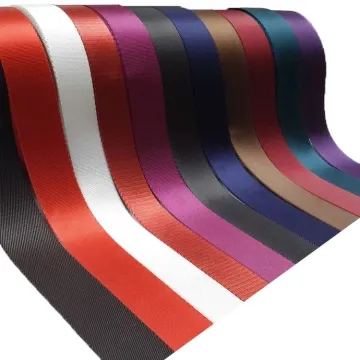
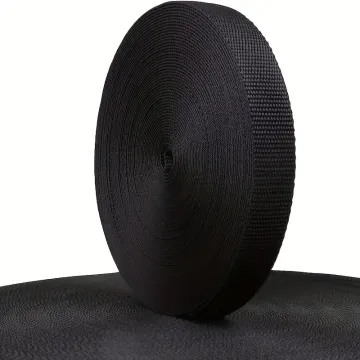
Webbing roll lengths and packaging
Roll format affects cutting efficiency and storage. Specify usable metres, permitted joins, roll direction and labelling by colour and batch before comparing packing options.
Content updated
In this guide
Key choices for your project
A roll length does not state how many joins are acceptable. Specify continuous length, permitted joins and how they are marked. Match roll size and core to the unwinding setup, and decide whether quantity is checked by length, weight or counted cut pieces.
- Continuous length and joins
- Roll and core dimensions
- Quantity verification method
The carton has the right metres, but production receives unusable rolls
Imagine a delivery whose total labeled length matches the purchase order. At cutting, several rolls are short, contain unmarked joins or include long leaders in the stated length; another roll is too large for the dispenser. Total metres did not define usable roll format.
Start from the buyer’s unwinding, storage and cutting constraints. Define net usable length per roll, allowed variation, continuous-length and join rules, measurement tension, leaders and damaged ends. Add core, diameter, winding direction, protection and label requirements, then run one packed-roll handling trial.
Specify and verify usable length, continuity and roll geometry per roll so a correct carton total can feed the buyer’s actual operation.
Agree how roll length will be measured
Define the counter method, allowable measuring tension and treatment of leaders, joins or unusable ends. Reconcile the roll label with receiving measurements on a small set before scaling the order. Different tension or inclusion rules can create disputes even when both counters work correctly.
- Counter method and measuring tension
- Rules for leaders, joins and unusable ends
Set roll geometry from warehouse handling
Confirm core size, maximum roll diameter, winding tightness and orientation for the rack, cutter or dispenser that will receive it. Add protection against crushed edges and telescoping during the chosen transport route. Trial one packed roll through handling before approving the carton layout.
- Core and maximum roll diameter
- Edge protection and winding stability
Write a roll-format and packaging specification
Connect quantity rules to downstream handling and verification.
Swipe to see all columns ↔
| Field | Record | Confirm |
|---|---|---|
| Usable length | Target net length, unit, variation and treatment of unusable ends | Measure agreed receiving sample |
| Continuity | Minimum continuous length, joins allowed, marking and position record | Inspect roll and label |
| Measurement | Counter method, measuring tension, leaders and reconciliation rule | Compare buyer and supplier method |
| Roll geometry | Core size, maximum diameter or handling weight and winding tightness | Trial on rack or dispenser |
| Direction and protection | Face, unwind direction, edge guards, moisture barrier and restraint | Open trial package |
| Identification | Item, colour, width, lot, roll ID and measured net length | Reconcile with packing list |
Carton total does not replace per-roll requirements. Permitted joins, leaders, variation and measurement rules are project-defined and should be stated before packing.
Download specification worksheet ↓Choose roll packaging from the buyer’s process
Map receiving and unwinding limits
Record rack, cutter, dispenser, lifting, storage and pallet constraints. Identify the roll dimensions and direction each operation can accept.
Define usable-quantity rules
State net length, continuous segments, joins, leaders, damaged ends, unit, counter method and measuring tension before comparing supplier options.
Trial one packed roll
Wind production-intent material on the proposed core, pack it and move it through receiving, storage and unwinding. Check edge and winding stability.
Reconcile labels and measurement
Measure a defined set at receipt, compare labels and packing list and resolve systematic method differences before scaling the order.
Three packaging assumptions that disrupt cutting
Specify only total carton metres
The total can be divided into inefficient short rolls or joined lengths. Set per-roll usable length and continuity rules.
Count leaders and damaged ends as usable
Different inclusion rules create quantity disputes. Define which sections belong to net length and how unusable material is marked.
Maximise roll size without a handling trial
A large roll may exceed the rack, lift or dispenser and deform in transport. Prove geometry through the buyer’s actual path.
Questions before you choose
What should a purchase order say about webbing roll length?
Specify net usable length per roll, permitted length variation, whether joins are allowed and how they must be marked. Also define leaders or damaged end allowances. A carton’s total metres do not show whether each roll works efficiently on the buyer’s line.
Which packaging details prevent problems at receiving and production?
Agree core size, winding direction, maximum roll dimensions or handling weight, moisture protection, roll identification and carton quantity. Labels should connect material, colour, width, lot and measured length. Confirm any pallet or destination requirements before packing starts.
Products to start with
Open a product to see its listed specification. Custom colours, dimensions and order terms are confirmed for your project.
More product photos
Tell us what you are making
You can enquire before every detail is settled. Tell us the intended use and what you need help choosing; add dimensions or quantities if you know them.
What happens after your enquiry
We review the intended use and open specification questions first. Sample options, costs, minimum quantities and timing can then be discussed against that brief. Sending an enquiry does not place an order.
Request a relevant sample →