Inch and metric webbing sizes
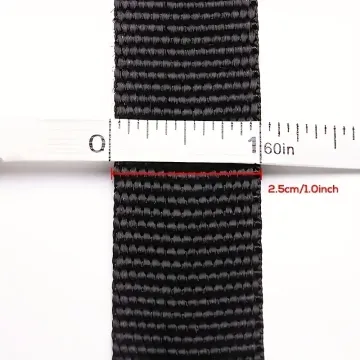
One inch is exactly 25.4 mm, not 25 mm. Record the controlling unit and tolerance so purchasing, tooling and inspection use the same dimension.
Content updated
In this guide
Key choices for your project
One inch is exactly 25.4 mm: 3/4 inch is 19.05 mm, 1½ inches is 38.1 mm and 2 inches is 50.8 mm. Commercial 20, 25, 38 or 50 mm tapes are not automatically identical to those inch sizes. Confirm the nominal size and tolerance against the hardware.
- Original unit on the drawing
- Exact conversion versus nominal size
- Hardware clearance after tolerance
Exact conversion is not the same as a trade size
One inch equals exactly 25.4 mm, but webbing sold as 3/4 inch or 20 mm may be treated as a nearby trade size. Put the required measured range and hardware in the RFQ.
Swipe to see the full comparison ↔
| Imperial callout | Exact metric conversion | Safe RFQ wording |
|---|---|---|
| 3/8 in | 9.525 mm | State whether you need the exact conversion or a nominal 10 mm tape. |
| 1/2 in | 12.700 mm | Give an acceptance range and the actual slot dimension. |
| 3/4 in | 19.050 mm | Do not assume a nominal 20 mm tape is interchangeable. |
| 1 in | 25.400 mm | State measured min/max; do not write only “1 in / 25 mm”. |
| 1 1/2 in | 38.100 mm | Confirm whether the mating hardware follows 38 mm or the exact conversion. |
Conversions are exact mathematical values. Trade-name equivalence and acceptance tolerance must be agreed separately.
A rounded conversion fits the drawing but binds in hardware
Imagine a drawing calling for three-quarter-inch webbing while a purchase message substitutes nominal 20 mm. The conversion is accepted by name, but the offered width exceeds the exact 19.05 mm callout and rubs the intended buckle slot. Adding the folded layers makes operation harder. A familiar nearby trade size has changed the controlling requirement.
Return to the original callout: three quarters of an inch is exactly 19.05 mm. Mark whether inch or millimetre controls, state the project-specific finished-width tolerance separately, and record a nearby trade size as a proposed deviation. Measure the tape and mating slot, thread the complete layer stack and operate the assembly before approving substitution.
Use exact mathematical conversion for communication, then approve nominal trade size, finished tolerance and hardware fit as separate project decisions.
Treat converted sizes as references until measured
Record both units on the drawing, but identify which value controls inspection. A familiar inch label may describe a commercial size rather than the exact mathematical conversion. Measure the proposed tape and hardware together before accepting a rounded metric replacement.
- Controlling unit on the drawing
- Measured tape and hardware opening
Prevent mixed-unit errors in every handoff
Repeat the controlling dimension on artwork, purchase order, sample label and inspection sheet with its unit beside the number. Avoid bare values in messages or filenames. If a supplier proposes the nearest available size, record it as a deviation and recheck the complete assembly.
- Unit shown on every controlled record
- Approved deviation for a substitute size
Keep exact conversions separate from trade sizes
These values are mathematical conversions; the acceptable finished width range must be confirmed for the specific project.
Swipe to see all columns ↔
| Imperial callout | Exact metric conversion | Project confirmation |
|---|---|---|
| 3/8 in | 9.525 mm | State whether exact conversion or nominal 10 mm controls |
| 1/2 in | 12.7 mm | Record the project width range and slot size |
| 3/4 in | 19.05 mm | Do not assume nominal 20 mm is interchangeable |
| 1 in | 25.4 mm | Keep one controlling unit on inspection records |
| 1 1/2 in | 38.1 mm | Confirm exact conversion versus nominal 38 mm |
| 2 in | 50.8 mm | Check proposed tape in the actual hardware |
One inch equals exactly 25.4 mm. A rounded or nearby commercial label does not by itself establish interchangeability or acceptance tolerance.
Download specification worksheet ↓Control units through drawing, purchase and inspection
Identify the source unit
Find the original drawing callout and mark one unit as controlling rather than letting two rounded values compete.
Convert without rounding
Use the exact mathematical conversion in supporting records and label any nominal commercial size as a separate proposal.
Define project acceptance
State the required finished-width range and mating hardware dimensions, then record approval of any proposed deviation.
Measure and assemble
Measure tape and slot, thread all folds or layers and operate the real hardware before releasing the combination.
Mixed-unit habits that create fit errors
Writing one inch as 25 mm
One inch is exactly 25.4 mm. Rounding silently changes the requirement and can affect hardware clearance.
Treating a trade label as measured width
Nominal 20, 25, 38 or 50 mm names can have agreed ranges. Inspect against project requirements.
Converting without checking assembly
Correct arithmetic does not prove fit. Tape thickness, doubled layers, slot shape and coating still require a component trial.
Questions before you choose
Is one-inch webbing always exactly 25.4 mm wide?
One inch converts exactly to 25.4 mm, but “one-inch webbing” may be a nominal trade description with its own tolerance. Do not order from the name alone. Put the required finished width and acceptable range in millimetres on the drawing.
Can inch-labelled buckles be matched to metric webbing by conversion alone?
Conversion is only the starting point. The buckle slot, corner radius, coating and webbing thickness affect fit. Obtain dimensional drawings for both items, then thread the actual layers and check adjustment and holding before approving the combination.
Products to start with
Open a product to see its listed specification. Custom colours, dimensions and order terms are confirmed for your project.
More product photos
Tell us what you are making
You can enquire before every detail is settled. Tell us the intended use and what you need help choosing; add dimensions or quantities if you know them.
What happens after your enquiry
We review the intended use and open specification questions first. Sample options, costs, minimum quantities and timing can then be discussed against that brief. Sending an enquiry does not place an order.
Request a relevant sample →