Choose rope diameter for your product
Nominal diameter does not describe compressibility. Test the rope through the smallest opening and measure it using an agreed method before approving a size.
Content updated
In this guide
Key choices for your project
Measure a compressible rope using an agreed method rather than squeezing it arbitrarily with callipers. Check the narrowest opening in the toggle, eyelet or fitting. Include the thickened end treatment, which may be larger than the rope body.
- Relaxed diameter and measurement method
- Smallest fitting opening
- Maximum finished-end diameter
Is the rope round enough for the intended fitting?
Measure two perpendicular axes at the same positions instead of recording a single diameter. An oval or locally flattened rope may pass a slot in one orientation and jam after it rotates. Record roundness along relaxed samples from different reel positions and compare it with the fitting geometry.
- Major and minor axes at matched positions
- Roundness from outer, middle and inner reel layers
A nominal rope diameter can pass the drawing and still jam the finished product
Imagine selecting 6 mm rope for a fitting with a slightly larger opening. The relaxed sample is oval, so its minor axis passes easily; after rotation, the major axis rubs. The finished sleeve is wider than the bare rope, and repeated pulling compresses the braid into a ridge at the exit. A second reel feels firmer and recovers more slowly.
Measure two perpendicular axes at matched positions from outer, middle and inner reel layers, after a defined relaxation period and under a stated measuring force. Thread both bare rope and the largest finished end through production hardware. Cycle the intended movement, allow recovery for an agreed interval, then record force, snagging, flattening, cover shift and exit ridges. Select against the complete tolerance stack rather than a nominal label.
Choose diameter from measured shape, construction, tolerance, finished-end profile and movement through the actual product interface.
Products to start with
Open a product to see its listed specification. Custom colours, dimensions and order terms are confirmed for your project.
More product photos
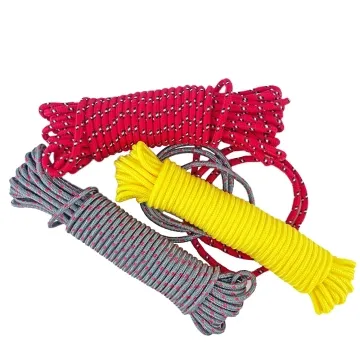
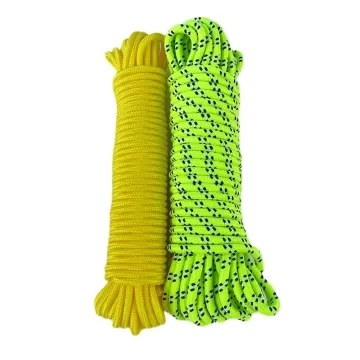
Does the rope recover after passing through the smallest opening?
Thread the rope and finished end through the actual restriction, then leave the component relaxed for an agreed interval. Inspect permanent flattening, cover displacement and a ridge at the hardware exit. Selection should consider the shape after passage, especially when the rope must move repeatedly or remain visible beside the fitting.
- Cross-section before and after the restriction
- Cover movement or ridge at the exit point
Specify the rope and the opening as one interface
The schedule connects rope geometry and recovery with hardware clearance, termination size and the product’s real movement.
Swipe to see all columns ↔
| Field | What to record | How to confirm |
|---|---|---|
| Rope construction | Fibre, braid, core, nominal diameter, firmness, finish and sample code | Inspect approved construction sample |
| Measured section | Major and minor axes, tolerance, method, force, relaxation time and positions | Measure marked relaxed samples |
| Reel variation | Outer, middle and inner layer values plus lot and reel identity | Sample across representative reels |
| Hardware interface | Opening shape, minimum dimensions, edge radius, path and orientation change | Use production fitting or controlled gauge |
| Finished end | Sleeve, splice, wrap, seam, ferrule and maximum profile | Measure production-built termination |
| Movement and recovery | Load, speed, cycles, dwell, recovery time, flattening, cover shift and snagging | Cycle complete assembled interface |
Diameter selection is application-specific; where load or safety performance matters, the buyer must define separate strength, durability and product acceptance tests.
Download specification worksheet ↓Prove clearance through the complete tolerance stack
Measure the real cross-section
Record major and minor axes at matched locations after defined relaxation, using the same method and measuring force for every sample.
Sample reel and lot variation
Compare outer, middle and inner reel layers across representative lots, retaining identity for any unusually oval, firm or soft result.
Build the largest passage case
Fit the maximum-profile sleeve, splice, wrap or seam and pass it through the minimum production opening in all required orientations.
Cycle and check recovery
Run the intended movement under defined load and speed, relax for the agreed interval, then inspect flattening, ridges, cover shift and snagging.
Diameter choices that ignore the working interface
Recording one calliper reading
A single orientation hides ovality. Measure perpendicular axes at the same marked position and report both values with the method.
Testing only bare rope
Sleeves, splices, wraps and seams often set the largest profile. Pass the production-built end through the actual restriction.
Treating clearance as strength approval
Passing a fitting does not prove load capacity or durability. Evaluate structural performance under the buyer’s separate product test plan.
Questions before you choose
How should a soft braided rope diameter be measured?
Agree a method that limits measuring pressure, because callipers can compress the rope. Measure several positions in a relaxed state and record the method with the value. Also measure the finished end, which may be larger than the rope body.
How much clearance should a rope have through a toggle or eyelet?
There is no universal allowance because rope compression and hardware geometry vary. Test the actual relaxed rope and its thickest end treatment through the smallest opening. Check easy threading, intended movement and whether edges abrade or pinch the cover.
Tell us what you are making
You can enquire before every detail is settled. Tell us the intended use and what you need help choosing; add dimensions or quantities if you know them.
What happens after your enquiry
We review the intended use and open specification questions first. Sample options, costs, minimum quantities and timing can then be discussed against that brief. Sending an enquiry does not place an order.
Request a relevant sample →