Nylon vs polyester rope for products
Compare ropes with the same diameter and braid. Record stretch, wet handling and knot or termination behaviour under the conditions your product will encounter.
Content updated
In this guide
Key choices for your project
For a rope handle or lead, compare stretch and recovery at the same construction and diameter. Nylon generally absorbs more moisture than polyester, so include a damp trial when relevant. The knot or sewn loop can change the result as much as the fibre choice.
- Matched construction for comparison
- Wet and dry handling
- Recovery at the finished loop
Which rope recovers its specified length after repeated extension?
Mark an agreed gauge length on comparable finished ropes and apply the buyer-defined cyclic extension sequence. Measure immediate and delayed recovery under the same conditioning, noting braid tightening or diameter change. The result belongs to those exact constructions; it should not be presented as a universal fibre ranking.
- Immediate and delayed length recovery
- Diameter or braid change after cycling
A dry hand-feel decision can reverse after the rope gets wet
Imagine a rope carry handle that feels comfortable in both nylon and polyester prototypes. After a damp-use trial, one handle changes length at the body attachment and the other becomes harder to bend through its sewn sleeve. The issue is no longer a generic fiber comparison; braid, core, moisture condition and termination are acting together.
Condition matched rope constructions dry and damp, build the intended knot, splice or sewn loop, and mark the free span plus both attachment zones. Compare extension, delayed recovery, diameter, bend behavior and surface change using the same sequence. Select from the finished component evidence.
Compare nylon and polyester as matched, conditioned rope assemblies, with the real termination included.
Products to start with
Open a product to see its listed specification. Custom colours, dimensions and order terms are confirmed for your project.
More product photos
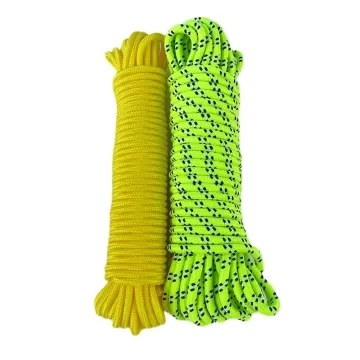
How does surface wear differ at the product's bend point?
Route equal constructions around the intended fitting or bend radius and use the buyer's agreed motion. Inspect fuzz, glazing, strand displacement and local flattening at fixed intervals. Compare dry and relevant damp conditions only when the application needs them, keeping end fittings and test setup identical.
- Wear mode at the defined bend location
- Dry and damp comparison under one setup
Record a fair rope-fiber comparison
The comparison must hold construction and assembly conditions visible so fiber is not credited for differences created by braid or termination.
Swipe to see all columns ↔
| Field | What to record | How to confirm |
|---|---|---|
| Rope construction | Fiber, diameter, braid pattern, core, finish and sample code | Measure and photograph each conditioned candidate |
| Moisture state | Drying history, wetting medium, soak or spray sequence and wait time | Condition candidates together before each comparison |
| Extension sequence | Gauge length, applied action, duration, repeats and recovery intervals | Mark the same span and log length at agreed times |
| Termination | Knot, splice or seam geometry, tail length and components | Build with the intended tools and inspect both ends |
| Bend interface | Fitting profile, bend radius, travel and contact direction | Route each assembly through the same production fitting |
| Observed changes | Length, diameter, braid set, stiffness, fuzz and local flattening | Compare with retained unworked controls by zone |
Results apply to the named rope constructions and assembly method; they do not establish a universal ranking for all nylon and polyester ropes.
Download specification worksheet ↓Choose the fiber through matched finished assemblies
Define the component conflict
Map wet exposure, free span, bend points and terminal type, then state whether recovery, handling, dimensional stability or surface wear drives the decision.
Match the comparison candidates
Source nylon and polyester routes with comparable diameter and braid architecture, record unavoidable differences, and retain unworked controls from both candidate lots.
Condition and assemble consistently
Apply the agreed dry and damp conditioning, build identical terminations with production components, and mark gauge and inspection zones before movement or loading.
Read recovery and damage by zone
Record immediate and delayed length, diameter and feel, then inspect bends and terminals separately before selecting or revising the assembly design.
Rope comparisons that hide the real cause
Treating equal diameter as equal construction
Two ropes can share nominal diameter but differ in core, braid angle and yarn count. Record the complete construction before attributing behavior to fiber.
Testing only a loose dry length
Moisture, fittings and terminations alter handling and recovery. Repeat the relevant conditioning on the finished route rather than relying on a hand sample.
Turning rope force into a product rating
A rope result excludes knots, seams, fittings and the product body. Use it for material comparison and validate the complete assembly separately.
Questions before you choose
Should an outdoor accessory use nylon or polyester rope?
Polyester generally takes up less moisture and changes less when damp, while nylon may offer a different stretch and hand. The braid and core can outweigh fibre-level expectations. Compare equal constructions after wetting, drying and repeated bending with the intended terminal.
Is nylon rope always stronger than polyester rope of the same diameter?
No. Diameter does not reveal fibre grade, braid, core or test method. Request comparable results for the exact ropes and note elongation as well as breaking force. A finished handle or lead also requires evaluation of knots, seams and hardware.
Tell us what you are making
You can enquire before every detail is settled. Tell us the intended use and what you need help choosing; add dimensions or quantities if you know them.
What happens after your enquiry
We review the intended use and open specification questions first. Sample options, costs, minimum quantities and timing can then be discussed against that brief. Sending an enquiry does not place an order.
Request a relevant sample →