Antistatic webbing specifications
Specify what is being measured and under which humidity conditions. A finish description alone is insufficient for selecting a component with an electrical requirement.
Content updated
In this guide
Key choices for your project
State the electrical property to be measured and the conditions of use. Humidity, contact arrangement and cleaning history can affect evaluation. Confirm the proposed construction and a test plan before using the word antistatic in a finished-product specification or claim.
- Property and acceptance range
- Humidity and contact conditions
- Evaluation after cleaning
A conductive stripe is not yet a complete discharge path
Imagine an electronics tote secured by a webbing loop. The tape has a conductive element, yet an insulating seam joins the loop, a plastic buckle interrupts it and the end lacks defined contact with the intended dissipation point. A reading on one loose section cannot show whether the assembly works as planned.
Map charge entry, each joint and its exit. Then agree the electrical property, specimen state, humidity conditioning, electrode arrangement and acceptance range. Compare readings at defined positions and after relevant care without presenting a loose-tape result as finished-product safety certification.
Specify a measured property and a continuous assembly path under stated conditions, not the word antistatic alone.
Define the electrical path through the product
Mark where charge is expected to enter, travel and dissipate in the complete assembly. A conductive element that ends at an insulating buckle may not support the intended function. Show every joint, coating and contact point so the proposed tape can be evaluated as part of that path.
- Continuous path across joints
- Connection to the intended dissipation point
Control conditioning before comparing readings
Agree sample conditioning, handling and measurement locations before comparing candidates, because moisture and contact setup can affect electrical readings. Test more than one position along the tape and record the equipment arrangement. Keep the conclusion tied to the supplied construction and stated conditions.
- Conditioning and contact setup
- Readings from defined tape positions
Define the electrical measurement and the path
The purchase document must make conditioning, contacts and specimen form repeatable.
Swipe to see all columns ↔
| Field | What to record | How to confirm |
|---|---|---|
| Measured property | Resistance, charge-decay or other buyer-selected method and range | Cite the agreed method and report units |
| Specimen form | Loose tape, sewn loop, hardware assembly or completed product | Draw the exact current or charge path through the specimen |
| Continuity points | Conductive yarn placement, seams, coatings, joints and termination | Check every transition and mark intended contact areas |
| Conditioning | Temperature, relative humidity, duration and handling before reading | Condition all comparison specimens together |
| Measurement setup | Electrode type, spacing, pressure, voltage and reading locations | Photograph the arrangement and label positions |
| Use history | Cleaning, flexing or wear state before evaluation | Apply the agreed sequence and keep untreated controls |
The limits and method come from the application; a material reading is not general product-safety approval.
Download specification worksheet ↓Verify the path before comparing numbers
Draw charge entry and exit
Mark where the user or product contacts the tape, every joint it crosses and the intended dissipation point. Flag insulating hardware or interrupted yarn paths.
Freeze specimen and conditioning
Build the stated loose or assembled specimen, then condition all candidates together. Record handling so moisture differences are not mistaken for construction effects.
Measure defined positions
Use the agreed electrode setup at multiple marked locations, including seams and terminations. Record units, environment and any unstable or position-dependent readings.
Review after relevant history
Repeat at the agreed cleaning, flexing or wear stage. Keep conclusions tied to that construction and let the finished-product owner assess system safety.
Assumptions that break antistatic specifications
Adding conductive yarn without mapping continuity
A conductive stripe can stop at a seam, coating or plastic buckle. Trace the complete route and verify each transition in the assembled specimen.
Comparing readings from different humidity
Moisture can materially change some electrical results. Condition candidates together and record environment, timing and handling with every valid comparison.
Extending a loose-tape result to the product
Assembly geometry and contact points can interrupt the intended path. Evaluate the specified product form and avoid turning material data into broad product safety certification.
Questions before you choose
What should ‘antistatic webbing’ mean in a purchase specification?
Define the measured property rather than the label: resistance or charge-decay method, test voltage, environment, conditioning and acceptable range. Humidity strongly affects some results. State whether the requirement applies to loose tape, a sewn loop or the complete product.
Is adding conductive yarn enough for an antistatic safety application?
Not by itself. Yarn placement, continuity through seams, contact with hardware and the path to the intended discharge point all matter. Evaluate the finished assembly under its use conditions, and do not treat an antistatic material result as a product safety certification.
Products to start with
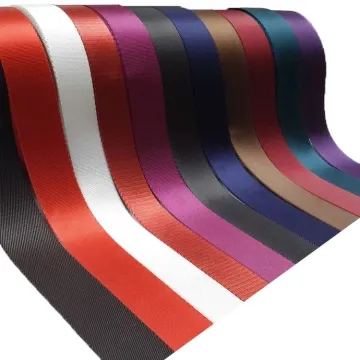
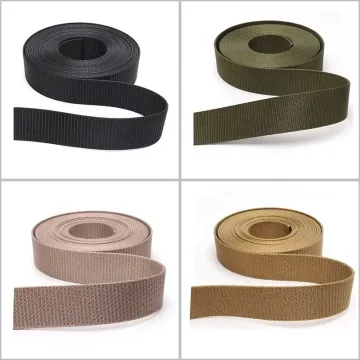
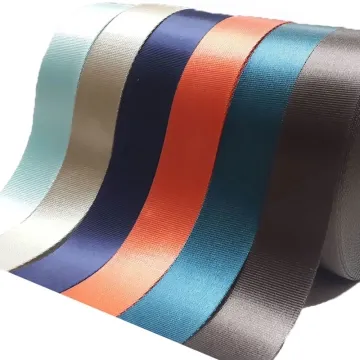
These products are starting references for the base construction. The requested finish and its test criteria need a separate feasibility review.
More product photos
Tell us what you are making
You can enquire before every detail is settled. Tell us the intended use and what you need help choosing; add dimensions or quantities if you know them.
What happens after your enquiry
We review the intended use and open specification questions first. Sample options, costs, minimum quantities and timing can then be discussed against that brief. Sending an enquiry does not place an order.
Request a relevant sample →