Antibacterial webbing finish requirements
State the intended use and the evidence your product team needs. Agree the assessment method and cleaning cycles; avoid treating a finish as a medical benefit.
Content updated
In this guide
Key choices for your project
Define what is being assessed, the intended contact and the required durability through cleaning. A treatment name does not establish a result for a finished product. Request evidence for the proposed material and conditions, and agree the wording of any product claim separately.
- Target of the assessment
- Durability after cleaning
- Evidence for the proposed material
Start with the claim and care routine, not a finish name
Imagine a reusable staff lanyard that is handled throughout a shift and cleaned on schedule. The brief asks for “antibacterial webbing” but does not state the intended claim, target organisms, test setup or how many care cycles the evidence must represent. A treatment label cannot fill those gaps.
The buyer should first agree the exact wording and destination-market review needed for the finished product. The proposed treated construction can then be compared before and after the specified care sequence for the agreed microbiological assessment as well as colour, hand, odour, sewing and hardware movement.
Tie every claim to the exact treated construction, agreed method, care history and permitted wording.
Define the claim before selecting a treatment
State the target use, organism scope and evidence needed for the market where the product will be sold. Terms such as antibacterial, odour control and hygienic describe different claims. Approve only wording supported for the exact treated construction and avoid extending a material result to health protection.
- Claim wording and target use
- Evidence tied to the treated construction
Check durability and product compatibility together
Condition the treated tape through the intended cleaning sequence, then reassess both the claimed property and normal product behaviour. Inspect colour, odour, hand, sewing and contact with adjacent materials. Record any care limit needed to preserve the approved result rather than treating the finish as permanent.
- Post-care evidence for the claim
- Colour, hand and sewing compatibility
Build an evidence request around the intended claim
The RFQ should separate microbiological evidence from product compatibility and marketing review.
Swipe to see all columns ↔
| Field | What to record | How to confirm |
|---|---|---|
| Intended statement | Exact antibacterial, odour-control or hygiene wording and placement | Review wording for destination market before artwork approval |
| Assessment scope | Target organisms, method, contact time and reporting format | Agree the laboratory protocol and report fields |
| Treated construction | Fibre, weave, shade, finish route and treated side | Link sample code and report to the exact material version |
| Care history | Cleaning chemistry, temperature, drying and required cycle point | Prepare specimens through the specified sequence before assessment |
| Product compatibility | Colour, hand, odour, sewing, buckle travel, adjacent materials | Compare treated and untreated assembly samples |
| Material identification | Order code, label and untreated-stock separation | Check purchase documents, packaging and retained sample |
A material assessment does not by itself justify a medical, health-protection or permanent-effect claim.
Download specification worksheet ↓Move from wording to a controlled treated sample
Set the claim boundary
Write the exact intended statement, user contact and sales market. Have the responsible buyer or regulatory reviewer decide what evidence that wording requires.
Freeze the treated construction
Identify substrate, shade, finish route and treated side. Keep an untreated control from a comparable base so appearance and handling changes remain visible.
Apply the care sequence
Clean and dry specimens using the proposed product instructions. Submit the defined cycle point for the agreed assessment, not an untracked loose swatch.
Review evidence and compatibility
Connect the report to the sample code, then inspect colour, hand, odour, sewing and hardware movement before approving wording and order code.
Claims that overreach the available evidence
Treating odour control as antibacterial proof
Reduced odour and measured activity against named organisms are different outcomes. Specify which result is required and avoid substituting sensory observation for laboratory evidence.
Using a report from another construction
Fibre, shade, finish application and care history can differ. Require traceability between the report, tested specimen and exact version being purchased.
Calling the effect permanent or protective
Durability must be tied to stated care conditions and evidence. Do not turn a material result into an unlimited medical or finished-product protection claim.
Questions before you choose
What must a buyer define before requesting antibacterial webbing?
Define the intended claim, target microorganisms, test method, contact conditions and required performance after care. A reduction measured in one laboratory setup does not justify a broader hygiene or health claim. Check the rules governing claims in the destination market.
Can an antibacterial finish change the webbing’s appearance or handling?
It can, depending on the finish and construction. Compare treated and untreated tape for shade, odour, hand, sewing, buckle movement and wash response. Approve the treated production construction and keep its identity separate from the standard version in ordering documents.
Products to start with
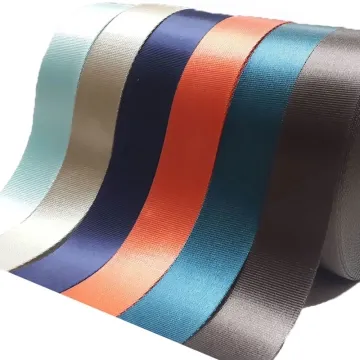
These products are starting references for the base construction. The requested finish and its test criteria need a separate feasibility review.
More product photos
Tell us what you are making
You can enquire before every detail is settled. Tell us the intended use and what you need help choosing; add dimensions or quantities if you know them.
What happens after your enquiry
We review the intended use and open specification questions first. Sample options, costs, minimum quantities and timing can then be discussed against that brief. Sending an enquiry does not place an order.
Request a relevant sample →