Woven, Braided or Knitted Tape: What Changes?
Woven, braided and knitted tapes are formed by different yarn paths. Those paths determine how a narrow textile bends, stretches, recovers, holds an edge and accepts decoration in the finished product.
Content updated
In this guide
Key choices for your project
Start with the movement your component must allow. Woven tape suits a stable face and controlled width; braided construction favors multidirectional flex and rounded or cord-like forms; knitted tape can offer easy stretch and soft binding behavior. Submit the required stretch, recovery, binding and material details before requesting a knitted sample or quote.
- Pull the sample lengthwise, crosswise and on the diagonal.
- Fold it around the smallest edge in the actual product.
- Test the intended print, woven motif or seam on the final width.
Three parts share a catalog width but need different yarn paths
Imagine a product using a flat logo strap, cord-like pull and soft stretch binding, all called 20 mm tape. One woven construction simplifies the list but resists tight pull curves and gives the binding poor recovery. Width did not define each task.
Specify cross-section, load direction, bend, stretch, recovery, edge, sewing and decoration for each part. Shortlist woven, braided or knitted formation by those movements, then confirm available fibre, width, finish and equipment. Prototype the selected construction in its real assembly before buying by category.
Choose formation from the component’s required movement and assembly, and confirm supplier capability before treating woven, braided or knitted tape as available.
Read the yarn path
Woven tape interlaces warp and weft, making width and face relatively controlled. Braiding crosses yarn systems diagonally, helping the structure curve and share movement around its circumference. Knitting forms interlocking loops, which can create stretch and recovery with a softer edge. Fiber and finishing still change each result, so process name alone is not a full specification.
Match structure to the job
Use woven tape when a flat strap must carry a stripe, jacquard motif, print or stable hardware path. Consider braid for drawcord-like components, tight curves or a compact rounded section. Knitted tape may suit soft binding or controlled elasticity. A bag handle, decorative cord and stretch binding solve different jobs even when their catalog widths appear similar.
Approve the process through use
Send the product photo, load direction, minimum bend, edge exposure and desired recovery. Ask which process is actually available in the required fiber, width and finish. Then compare labeled samples for width change, edge roll, snagging, seam feeding and decoration clarity. Final hand and performance belong to the approved construction, not to the family name.
Compare narrow-textile formation routes
Translate the component task into observable construction evidence.
Swipe to see all columns ↔
| Field | Record | Confirm |
|---|---|---|
| Component job | Flat strap, binding, pull, loop, trim or rounded cord-like part | Mark on finished-product drawing |
| Form and path | Flat or rounded section, bend radius, route, load direction and contact surfaces | Build path model |
| Movement | Required stretch, direction, recovery, compression and torsion | Cycle labeled samples |
| Edges and sewing | Exposed edge, curl, snag risk, seam type, feed and layer stack | Sew production-intent trial |
| Decoration | Stripe, print, jacquard, colour placement and visible face | Review finished-width sample |
| Process availability | Fibre, width, finish, equipment route, sample status and supplier scope | Obtain explicit capability confirmation |
Process family does not guarantee a particular strength, stretch or hand. Final requirements belong to the approved construction, and unsupported routes remain development enquiries.
Download specification worksheet ↓Select the formation through component use
Map required movement
Record how each component bends, stretches, recovers, twists, carries load and contacts hardware or skin. Separate parts that only share a nominal width.
Shortlist suitable structures
Compare woven stability, braided multidirectional conformity and knitted loop behaviour against the required cross-section, edge, sewing method and decoration.
Verify actual supply capability
Ask whether the required fibre, width, finish and process can be sampled on available equipment. Record development differences and limitations.
Prototype in the final path
Sew, route and cycle labeled candidates in the intended product. Approve observable behaviour and the exact construction, not only its family name.
Three process comparisons that overgeneralize
Treat the family name as a performance value
Fibre, yarn, density and finish create wide variation within every process family. Specify the exact construction and test the finished tape.
Assume equal width means interchangeability
Flat, rounded and extensible forms occupy space and move through assemblies differently. Compare cross-section, edge behaviour and the actual component path.
List knitted tape as confirmed supply
A useful concept is not proof of equipment or material availability. Request explicit feasibility and a representative sample before quotation commitment.
Questions before you choose
Is braided tape always more flexible than woven tape?
Not always. Braid angle often supports curves, but yarn size, compactness, coating and section shape can make a braid firm. Compare samples in the same bend and load rather than choosing from the process label alone.
Can knitted tape be quoted from this range?
Submit the target stretch and recovery, binding function, fiber, width and hand for a feasibility review. Until the structure and equipment are confirmed, do not specify knitted tape as a standard available construction or base production planning on it.
Products to start with
Open a product to see its listed specification. Custom colours, dimensions and order terms are confirmed for your project.
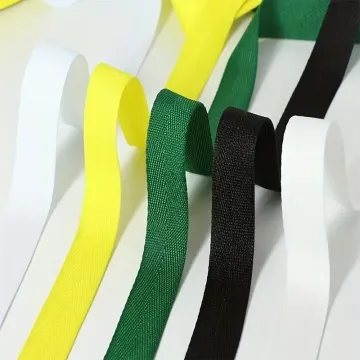
More product photos
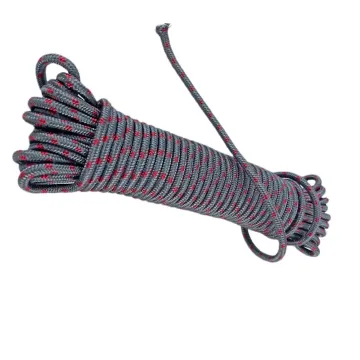
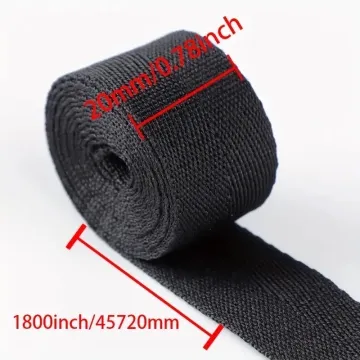
Tell us what you are making
You can enquire before every detail is settled. Tell us the intended use and what you need help choosing; add dimensions or quantities if you know them.
What happens after your enquiry
We review the intended use and open specification questions first. Sample options, costs, minimum quantities and timing can then be discussed against that brief. Sending an enquiry does not place an order.
Request a relevant sample →