Why webbing weight per metre belongs in the specification
Weight per metre is a useful construction check when it is measured consistently. It can reveal a change in yarn content, density or finish, but it cannot replace a strength test or identify the cause by itself.
Content updated
In this guide
Key choices for your project
Add weight per metre when material usage and batch consistency matter. Compare it only among samples with the same finished width, conditioning and measurement method. For example, a lighter 25 mm roll may indicate lower density, a thinner finish or normal moisture variation. Investigate those variables before accepting or rejecting the material.
- Condition and measure a defined relaxed length without stretching it.
- Record finished width, thickness and roll or batch beside every result.
- Use a separate test for strength, elongation or other performance requirements.
Two weight-per-metre checks disagree even though the roll looks unchanged
Imagine the receiving team weighs a short strip from a humid shipment, while the supplier divides gross roll weight by labeled length without removing the core. Both report grams per metre, but specimens, moisture and calculations differ. A lighter result is treated as proof of weaker webbing.
Agree specimen length, conditioning, balance resolution, exclusions and calculation before setting a range. Sample several identified rolls and locations, measure relaxed finished width and thickness beside mass, and investigate yarn, density, finish or moisture when results shift. Keep strength as a separate test.
Weight per metre is a consistency signal only when sampling and calculation match; it cannot identify the cause or replace performance evidence.
Measure a repeatable specimen
Agree the specimen length, balance resolution and whether cut ends, joins or packaging are excluded. Let the tape lie relaxed and test more than one location or roll. Short pieces magnify cutting and scale error, while a complete roll weight may include the core. State the calculation and report grams per metre with the sample identity.
Use weight with width and thickness
The same mass spread across different widths does not describe the same construction. Read weight per metre beside finished width, thickness, weave and hand. A denser tape may feel firmer; a coating may add mass without adding woven yarn. When a result shifts, compare the physical samples before assigning a cause.
Set a bulk control that fits the order
Build an initial range from approved production-representative samples rather than copying an unrelated catalogue value. Decide how many rolls and positions to sample, how results are rounded and what triggers review. Keep the retained sample and raw measurements, so a later deviation can be discussed with evidence rather than a visual impression alone.
Create a repeatable mass-per-length record
Control the specimen, weighing method and comparison context.
Swipe to see all columns ↔
| Field | Record | Confirm |
|---|---|---|
| Sample identity | Item, revision, lot, roll, colour and cut location | Label each specimen before cutting |
| Condition | Package opening, conditioning atmosphere, duration and relaxed state | Record times and room readings |
| Specimen rule | Cut length, quantity, joins, damaged ends and edge treatment | Use agreed cutting plan |
| Weighing | Balance ID, resolution, tare, container and repeat reading | Check with suitable reference weight |
| Calculation | Measured length, mass, unit conversion, rounding and reported g/m | Retain raw values and formula |
| Companion fields | Finished width, thickness, weave, hand and finish observations | Compare with approved master |
A control range should come from approved production-representative material measured by this method. Sampling frequency and review limits are project-defined.
Download specification worksheet ↓Use weight as a controlled construction check
Define the measurement method
Agree specimen length, conditioning, balance resolution, exclusions, unit conversion and rounding. Avoid mixing short-specimen and gross-roll calculations.
Take distributed identified samples
Select agreed rolls and positions, let tape relax and mark every specimen. Exclude joins or damaged ends only as the written rule permits.
Weigh, calculate and cross-check
Record raw mass and actual length, calculate grams per metre and measure finished width and thickness under the agreed state.
Investigate linked changes
When values shift, compare physical samples and records for yarn, density, coating, finish or moisture changes before accepting, rejecting or revising the range.
Three misuses of weight per metre
Divide gross roll weight by label length
Core, wrapping and inaccurate labeled length enter the result. Use a defined specimen or fully documented net-roll calculation.
Compare different finished widths
The same mass spread over another width describes another construction. Align width and method or normalize only under an agreed purpose.
Treat lighter as weaker
Mass may change through yarn, density, finish or moisture, while strength needs its own test. Investigate the construction before drawing performance conclusions.
Questions before you choose
Does heavier webbing mean stronger webbing?
Not necessarily. More mass may come from yarn, weave density, coating or finish, and fibre performance still differs. Strength must be checked on the actual finished construction with an agreed test method and acceptance requirement.
What should I include in a weight-per-metre enquiry?
Provide end use, material, finished width and thickness, an approved sample if available, estimated quantity and the reason for controlling weight. Ask the supplier to state the specimen method and production range proposed for approval.
Products to start with
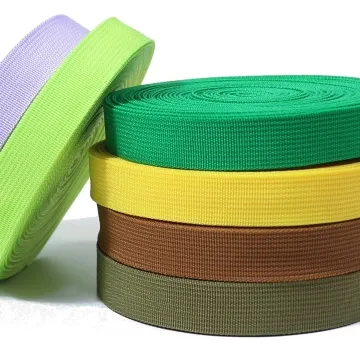
Open a product to see its listed specification. Custom colours, dimensions and order terms are confirmed for your project.
More product photos
Tell us what you are making
You can enquire before every detail is settled. Tell us the intended use and what you need help choosing; add dimensions or quantities if you know them.
What happens after your enquiry
We review the intended use and open specification questions first. Sample options, costs, minimum quantities and timing can then be discussed against that brief. Sending an enquiry does not place an order.
Request a relevant sample →