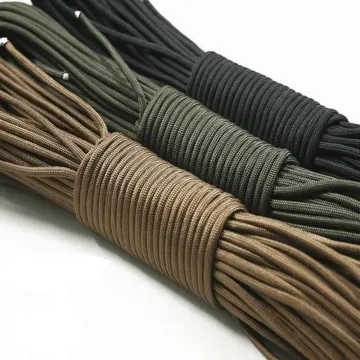
How to Specify Webbing Straps for Tents
Tent anchor loops, storage straps and pole-bag compression straps share an outdoor setting but perform different jobs. One width and buckle specification rarely suits all three.
Content updated
In this guide
Key choices for your project
Give each location its own BOM line and drawing. Define the anchor loop from the tent's load path, the storage strap from packed circumference and compression, and the pole-bag strap from bundle diameter and handling. Build each with its actual buckle, fabric stack and seam, then validate the finished tent or bag under buyer-defined conditions.
- Separate anchor, storage and pole-bag functions
- Actual buckle, fabric and seam stack
- Buyer-defined finished-product validation
Choose dimensions from the installed location
An anchor loop must fit the tent edge construction and transfer force into its reinforcement without forcing a bulky fold. A storage strap needs enough adjustment for the buyer's packed-size range and a buckle that remains operable after compression. A pole-bag strap should restrain a hard bundle without creating a sharp loose tail. Measure the built assemblies; loose webbing width and cut length do not define these interfaces alone.
- Anchor overlap into reinforcement
- Packed-size adjustment range
- Pole bundle restraint and tail control
One tent can need three straps that should not share one construction
Imagine using the same black webbing for a ground anchor, a packed-tent compression strap and a pole-bag handle. The anchor repeatedly folds at a sewn loop and remains outdoors under tension; the compression strap wraps a soft changing bundle and slides through a buckle; the handle carries a compact bag and rubs against pole ends. A tape that works smoothly in the buckle may bunch at the anchor or feel sharp in the hand.
Separate every strap by function, load path, interface and environmental sequence. Record the packed dimensions and variability of the tent, the exact buckle or pole interface, attachment geometry and required handling. Build each production-equivalent assembly, then evaluate its own tension direction, adjustment, bending, wetting, contamination and packing cycles. Keep role-specific acceptance records so a successful closure strap does not silently qualify a structural anchor.
Specify tent webbing by role, with separate constructions and acceptance for anchors, packed-product closures, pole-bag handles and their exact interfaces.
Products to start with
Open a product to see its listed specification. Custom colours, dimensions and order terms are confirmed for your project.
More product photos
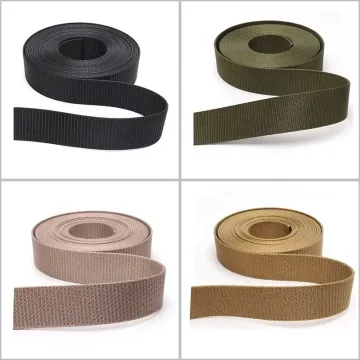
Test contamination and weather exposure by position
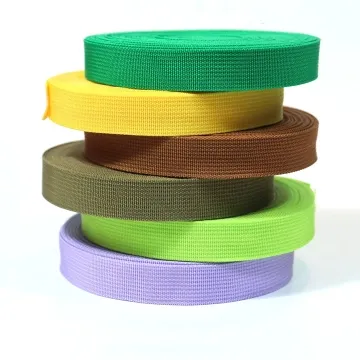
Ground-level anchors encounter wet soil and grit, storage straps remain wrapped for long periods, and pole bags see repeated buckle movement and abrasion. Condition samples according to the buyer's outdoor and cleaning plan, then inspect buckle travel, trapped particles, colour change, stiffness, seam distortion and drying. Use colour-coded cut labels or kitting IDs so visually similar straps cannot be installed in the wrong tent location.
- Position-specific wet and grit exposure
- Adjustment and seam condition after cleaning
- Cut-part or kit identification
Create a role-specific tent strap schedule
The schedule distinguishes structural, closure, handling and storage duties and connects each tape to its geometry, environment and finished assembly.
Swipe to see all columns ↔
| Field | What to record | How to confirm |
|---|---|---|
| Strap role | Ground or fly anchor, compression closure, carry handle, pole-bag strap or organiser | Mark every location on product drawing |
| Webbing reference | Fibre, weave, width, thickness, finish, colour, lot, face and sample code | Compare retained production tape |
| Product geometry | Tent packed dimensions and variation, strap span, exposed length, fold and storage position | Measure representative packed states |
| Interface | Exact buckle, loop, ring, pole, bag panel or tent fabric with drawings and contact surfaces | Build production-equivalent interface |
| Attachment and load | Seam, reinforcement, edge distance, layer stack, load direction and adjustment range | Inspect marked assembly |
| Environment and cycles | Wetting, soil, temperature, bending, packing, adjustment, carry and recovery sequence | Run duty-specific evaluation |
The buyer must define structural loads, durability and product acceptance separately for each role; common material does not make the duties equivalent.
Download specification worksheet ↓Develop every tent strap for its own duty
Map roles and load paths
Name every strap and trace force through its tape, hardware, seams, reinforcement and tent or bag material.
Measure packed and deployed states
Capture bundle variation, strap span, folds, adjustment and storage because tent geometry changes substantially between these states.
Build each exact interface
Use the specified buckle, pole, ring, panel layers and production attachment rather than judging loose tape or generic hardware.
Apply duty-specific sequences
Cycle anchors, closures and handles through their own loads, weather, adjustment and packing before issuing separate acceptance records.
Tent strap shortcuts that confuse different duties
Using one specification for every strap
Anchors, closures and handles see different loads and motion. Assign role-specific construction, tests and acceptance to each location.
Ignoring packed-size variation
A closure fitting one sample may bottom out or leave excessive tail on another. Check realistic minimum and maximum bundles.
Approving tape without its interface
Buckle grip, pole contact and sewn anchors govern performance. Build the exact hardware or product connection before approval.
Questions before you choose
Can one webbing construction be used in all three tent locations?
It may be possible after each assembly passes its own checks, but common material should not be assumed from colour alone. An anchor's sewability and load path, a storage strap's adjustment range and a pole-bag strap's abrasion pattern remain separate approval decisions.
Does outdoor or heavy-duty wording prove suitability for safety loads?
No. Appearance and product naming do not establish certification or a load rating. Any safety-related or load-critical application requires the buyer's specified standard, component requirements and complete-product validation by the designated responsible party.
Tell us what you are making
You can enquire before every detail is settled. Tell us the intended use and what you need help choosing; add dimensions or quantities if you know them.
What happens after your enquiry
We review the intended use and open specification questions first. Sample options, costs, minimum quantities and timing can then be discussed against that brief. Sending an enquiry does not place an order.
Request a relevant sample →