Webbing Handles for Fabric Storage Baskets
A fabric storage basket handle works with a flexible wall, not a rigid bag body. Grip opening, anchor depth and binding intersections decide whether the basket carries cleanly or collapses unevenly.
Content updated
In this guide
Key choices for your project
Set handle geometry on the full basket. Load it with the intended contents, lift from both handles and observe how the sidewalls transfer force. Then empty and fold the basket to ensure the handle and reinforcement do not create a hard, bulky hinge.
- Measure usable hand opening with the basket loaded and the sidewall pulled inward.
- Inspect the anchor, binding intersection and wall fabric during repeated lift-and-set cycles.
- Fold the empty basket in its packing direction and check handle bulk and permanent creasing.
Handle size depends on the moving sidewall
A nominal loop can become smaller when a soft wall bends toward the load. Define the finished inside opening and grip width while the basket is filled. A broader tape may feel better in the hand but demands a larger sewing zone. The handle drop should also let the basket clear the user’s fingers without becoming a snag during storage.
A strong handle can still peel a soft basket wall apart
Imagine a fabric storage basket lifted with books inside. The loose webbing passes a pull check, yet its short ends sit only beneath the decorative top binding. As the basket tilts, the handle rotates outward, the stiff fold presses into the sidewall and the binding seam begins to peel. A second sample survives because its longer anchors spread the load into a reinforced wall panel.
Define the contents, filled mass, lift direction and number of handles before choosing the tape. Build the actual sidewall stack with lining, stiffener, binding, anchor length, reinforcement and production seams. Load the complete basket from realistic hand positions, include angled lifts and repeated setting down, and inspect both faces for wall distortion, seam opening and handle rotation. Record the exact assembly, because loose-webbing strength does not describe how a soft basket carries load.
Approve basket handles on the complete sidewall construction, with realistic contents, anchor geometry, binding interaction, angled lifting and visible deformation limits.
Products to start with
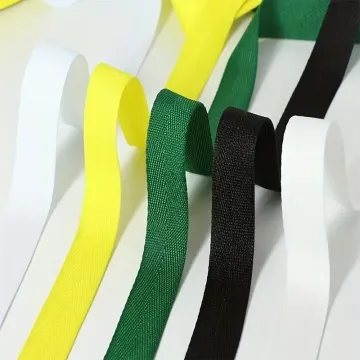
Open a product to see its listed specification. Custom colours, dimensions and order terms are confirmed for your project.
More product photos
Resolve binding and anchor layers together
The handle seam often meets top binding, wall reinforcement and lining. Stacking every layer at one point makes sewing difficult and creates a stiff corner. A sectional mock-up can offset fold lines or taper reinforcement while preserving the intended load path. Complete-basket testing must confirm wall tearing, seam movement and carrying durability; loose webbing strength alone is insufficient.
Define the handle and sidewall as one load path
The build record connects the basket contents and hand position to the tape, concealed anchor, reinforcement, binding and finished-wall observations.
Swipe to see all columns ↔
| Field | What to record | How to confirm |
|---|---|---|
| Basket duty | Model, intended contents, filled mass, handle count, carry distance and lift directions | Review product-use brief |
| Webbing reference | Fibre, weave, width, thickness, finish, colour, lot, approved face and sample code | Compare retained production tape |
| Sidewall stack | Outer fabric, lining, stiffener, padding, binding and layer order at every handle position | Section representative wall build |
| Anchor geometry | Insertion depth, end treatment, fold, spacing, reinforcement patch, seam path and edge distances | Measure marked assembly |
| Handle geometry | Exposed length, hand clearance, pair spacing, orientation and allowed rotation under load | Check filled basket |
| Finished response | Wall deflection, local crushing, seam opening, binding movement, tape slip and handle symmetry | Inspect during and after loading |
The buyer must define load, cycle and product acceptance; tape data alone cannot establish the capacity of the sewn basket assembly.
Download specification worksheet ↓Develop the handle around the filled basket
Map the complete load path
Trace force from the hand through exposed tape, folded anchor, seams, reinforcement and sidewall layers for each lifting direction.
Build production wall sections
Use exact fabrics, stiffener, binding, stitch layout, anchor depth and edge distances because substitutes change peel and local crushing.
Load the finished basket
Fill with representative contents, lift from realistic hand positions, tilt and set down repeatedly while recording wall and handle movement.
Open and compare assemblies
Inspect hidden anchors, reinforcement and seam damage, then retain the accepted basket, tape lot and construction record together.
Handle decisions that ignore the soft structure
Selecting by tape strength alone
Strong webbing cannot compensate for a short anchor or weak wall. Test the complete sewn basket under the intended load.
Hiding anchors beneath binding
The binding can conceal insufficient insertion and seam damage. Specify the concealed geometry and section representative loaded samples.
Testing only a vertical pull
Real carrying adds outward rotation and uneven loading. Include angled lifts, one-side handling and repeated setting down in the plan.
Questions before you choose
Can tote-bag handle dimensions be copied to a fabric basket?
Not safely without a basket trial. A flexible basket wall deforms and the top binding may share the anchor, changing the hand opening and force path. Measure and load the completed basket.
What should be sent for a storage-basket handle sample?
Provide basket dimensions, wall and lining cross-section, top binding, intended load range, finished hand opening and folding direction. A cut panel with the actual anchor layers helps assess sewing before a full prototype.
Tell us what you are making
You can enquire before every detail is settled. Tell us the intended use and what you need help choosing; add dimensions or quantities if you know them.
What happens after your enquiry
We review the intended use and open specification questions first. Sample options, costs, minimum quantities and timing can then be discussed against that brief. Sending an enquiry does not place an order.
Request a relevant sample →