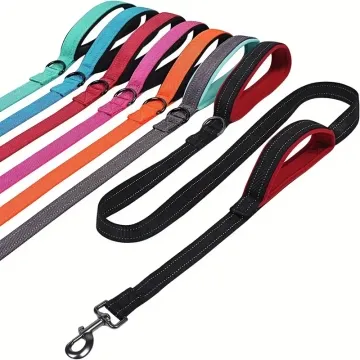
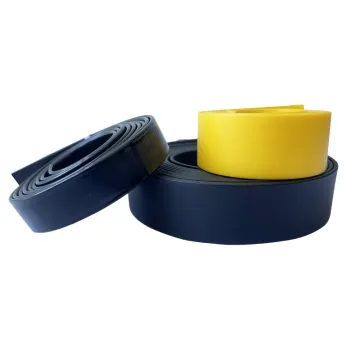
Lightweight materials for small dog leashes
For a small dog, heavy clips can outweigh the benefit of lighter tape. Compare the weight and stiffness of the complete lead, not just the webbing.
Content updated
In this guide
Key choices for your project
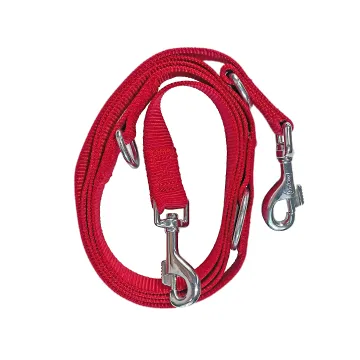
Reducing tape width does not reduce the weight of the clip. Weigh the complete leash and compare how the attachment hangs. Keep the intended strength and durability requirements in the brief while exploring a lighter tape, shorter overlap or smaller compatible hardware.
- Complete leash weight
- Clip-to-tape balance
- Comfort of the finished grip
Can the light tape stay clear of the snap's moving gaps?
Thin, flexible tape can enter a swivel gap or fold against a narrow eye even when its nominal width fits. Cycle the assembled snap through rotation and slack-to-tension changes, then inspect pinching, folded edges and cut yarns. Select the connector and fold geometry as a pair with the tape.
- Tape position inside the snap eye during slack
- Pinching or yarn damage after rotation cycles
A lighter tape does not guarantee a lightweight leash
Imagine narrowing a leash webbing to reduce mass for a small-dog product. The original clip now accounts for much of the finished weight and makes the connection hang below the tape. A shorter sewn overlap saves a little material but creates a stiffer lump near the clip, while a very supple replacement twists in the hardware and presents its edge in the handle.
Weigh the complete leash and each component, then map where mass and stiffness sit along the finished length. Build the intended clip, ring, handle and joints rather than comparing loose tapes. Check hang, pickup, grip, twisting and hardware movement through the buyer’s use sequence. Keep the required load and durability criteria unchanged while exploring tape construction, overlap geometry and compatible smaller hardware.
Lightweight design must balance the complete leash’s component mass, stiffness distribution, joint geometry, handling and buyer-defined performance requirements.
Products to start with
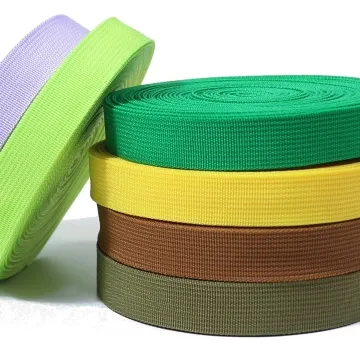
Open a product to see its listed specification. Custom colours, dimensions and order terms are confirmed for your project.
More product photos
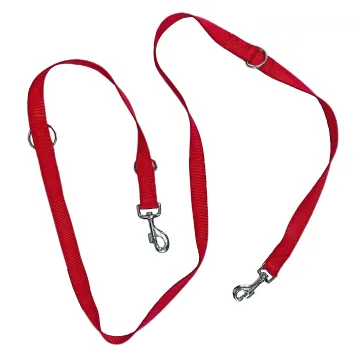
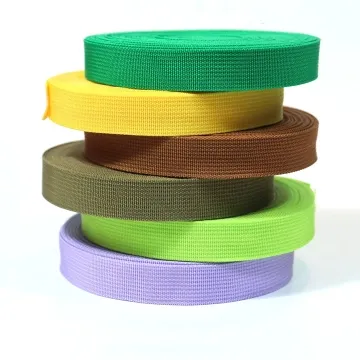
Is the hand loop easy to find and open without added bulk?
Compare loop shapes using the intended user hand, clothing and pickup motion. A small, very soft loop may collapse flat on the ground, while a bulky reinforcement can outweigh the light construction. Record the loop opening after storage and whether the hand enters without twisting the leash.
- Loop opening immediately after storage
- Hand entry without leash twist or extra hardware
Create a mass and construction budget for the complete leash
The schedule shows whether changing the tape actually improves the assembled product without hiding weight or stiffness in hardware and joints.
Swipe to see all columns ↔
| Field | What to record | How to confirm |
|---|---|---|
| Webbing or rope | Fibre, construction, width or axes, thickness, finish, firmness, mass per length and sample code | Measure approved material sample |
| Hardware set | Clip, ring, adjuster or swivel model, dimensions, mass, opening and compatible passage | Weigh production components |
| Joint build | Fold or splice, overlap, layers, reinforcement, cut treatment, stitch and maximum profile | Open a production-equivalent joint |
| Mass distribution | Finished total plus material, hardware, handle and joint contributions | Weigh identified complete prototypes |
| Handling response | Hang, pickup, grip, flex, twisting, edge presentation and hardware rotation | Run buyer-defined handling sequence |
| Performance evidence | Load directions, cycles, acceptance criteria, observations and retained sample | Follow complete-product test plan |
A small-dog label does not reduce the required product evidence; the buyer must define strength, durability, hardware and finished-leash acceptance.
Download specification worksheet ↓Remove mass from the complete system
Establish the current mass budget
Weigh the complete leash and its tape, clip, ring, handle and joints separately, retaining the exact component identities.
Choose compatible changes
Compare lighter constructions, revised overlaps and smaller hardware only where dimensions, threading and intended movement remain compatible.
Build complete prototypes
Assemble each option at the same finished length with production joints, then record stiffness transitions, hang, twist and edge presentation.
Validate required performance
Apply the buyer’s unchanged load and durability criteria to identified complete builds before accepting any weight reduction.
Lightweight choices that move rather than solve the problem
Reducing only tape width
A heavy clip can dominate total mass and pull the joint downward. Weigh every component and the finished leash.
Shortening overlap without rebuilding
Less material changes stitch area, local stiffness and transition shape. Treat the joint as a new construction and validate it.
Approving the lightest loose tape
A supple sample may twist through hardware or form a sharp handle edge. Compare complete leashes through the intended handling sequence.
Questions before you choose
How can a small-dog leash be made lighter without feeling flimsy?
Reduce total system mass, not just webbing width. Compare lighter tape with proportionate snap, rings and handle construction. Keep enough width for comfortable grip and sewing. Evaluate the complete leash because oversized hardware can outweigh any saving in the tape.
Is thin polypropylene webbing suitable for a small-dog leash?
It may suit some designs if the exact construction, hardware and sewn joints meet the product requirements. Thin tape can fold, twist or feel sharp. Build the complete leash and assess grip, snap connection, edge feel, wet handling and defined assembly performance.
Tell us what you are making
You can enquire before every detail is settled. Tell us the intended use and what you need help choosing; add dimensions or quantities if you know them.
What happens after your enquiry
We review the intended use and open specification questions first. Sample options, costs, minimum quantities and timing can then be discussed against that brief. Sending an enquiry does not place an order.
Request a relevant sample →