Rope end finishing for product assembly
The end treatment must suit the rope material and fitting. Check fraying, hard edges and pull-out after assembly, including the part hidden inside a sleeve.
Content updated
In this guide
Key choices for your project
Choose end finishing for the fibre and the next assembly step. A sealed tip may help threading but create a hard or enlarged end. Where the core and cover are different materials, check that both remain contained after bending and pulling the finished termination.
- Core and cover containment
- Finished tip diameter
- Hard edges after sealing
Does the finished end stay centred on the rope axis?
Mark the braid direction before applying the proposed end finish, then roll the completed part on a flat reference or insert it into the mating fitting. Look for an off-centre sleeve, angled seal or twisted cover that makes the end wobble. Alignment matters independently from pull-out performance.
- End centreline relative to the rope axis
- Rotation or wobble inside the mating fitting
A neat rope tip can still fail inside the finished termination
Imagine a braided rope entering a metal sleeve. Heat sealing makes threading easy, but the melted bead is wider and harder than the relaxed rope. Trimming the bead restores clearance, yet exposes several cover picks. The core then creeps backward while the sleeve is crimped, leaving a soft section beside a sharp sealed ridge.
Define the fibre and construction before selecting heat, stitching, whipping, adhesive or a mechanical cap. Build the termination with production tools and the specified preparation length. Section one sample to inspect hidden core and cover capture; bend and pull others in every service direction. Record finished profile, hard edges, fraying, slip and the exact process window so an attractive visible tip does not conceal an unstable assembly.
Approve rope end finishing as part of the complete termination, including hidden containment, profile, edge feel and repeatable process settings.
Products to start with
Open a product to see its listed specification. Custom colours, dimensions and order terms are confirmed for your project.
More product photos
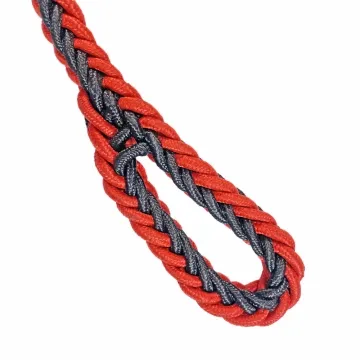
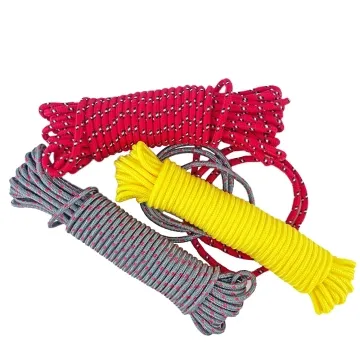
How much length does the end process consume in production?
Make a short run using the actual cutting and finishing sequence, recording rope length before and finished datum after each operation. Compare several pieces for variation and identify any trim waste. Use that evidence to set cut instructions; do not copy an allowance from a different braid or terminal.
- Length consumed by each finishing operation
- Finished-datum variation across the trial pieces
Write an end-preparation and termination record
The record links rope construction to the finishing method, next assembly step and checks on both visible and hidden regions.
Swipe to see all columns ↔
| Field | What to record | How to confirm |
|---|---|---|
| Rope identity | Fibre, braid, core, size, finish, colour, lot and sample code | Match approved rope and production lot |
| Preparation method | Cut tool, heat or ultrasonic setting, stitch, whipping, adhesive or cap | Record controlled work instruction |
| Prepared geometry | Preparation length, maximum tip profile, taper, exposed picks and hardness | Measure and inspect marked samples |
| Termination build | Sleeve or fitting, insertion depth, fold, stitch or crimp setting and orientation | Build with production tools |
| Hidden containment | Core and cover position before and after assembly, with permitted movement | Section a retained sample |
| Finished response | Bending directions, pull condition, fraying, slip, hard edge and appearance | Test complete terminations |
End preparation alone does not establish termination strength; the buyer must define load, durability and product acceptance for the complete assembly.
Download specification worksheet ↓Develop the finish around the real assembly
Identify the rope construction
Confirm fibre, core, cover and finish because a method suitable for one layer can melt, stiffen or release another.
Screen preparation options
Compare cut, sealed, stitched, whipped, bonded or capped samples for profile, hardness, loose picks and compatibility with the next operation.
Build production terminations
Use specified insertion depth, sleeve, stitch or crimp settings and preserve sample identity through assembly and any cleaning step.
Open, bend and pull
Section one unit for hidden containment, then cycle matched units through required bend and pull directions before recording damage and slip.
End-finishing shortcuts that hide assembly risk
Approving the loose tip
A tip that looks clean before assembly may enlarge, split or push the core backward during insertion, sewing or crimping.
Using heat without a process window
Flame distance, dwell and operator technique change bead size and hardness. Specify controlled equipment settings and an acceptable finished profile.
Inspecting only the visible end
A sleeve can hide frayed cover or displaced core. Section retained samples and trace findings to the exact rope lot and build.
Questions before you choose
Which end finish should be used on braided rope?
Choose from fibre, braid, core and connection. Heat treatment may suit some thermoplastic constructions; others need whipping, stitching, a sleeve, knot or moulded terminal. Trial the exact method and inspect exposed core, hard edges, diameter growth and pull-through.
Can a rope end be finished before it is cut to length?
Only if the process and length control are designed together. Some finishes consume rope or create a terminal longer than expected. Define cut length, finished length and hidden allowance separately, then make several pieces to confirm consistency before bulk cutting.
Tell us what you are making
You can enquire before every detail is settled. Tell us the intended use and what you need help choosing; add dimensions or quantities if you know them.
What happens after your enquiry
We review the intended use and open specification questions first. Sample options, costs, minimum quantities and timing can then be discussed against that brief. Sending an enquiry does not place an order.
Request a relevant sample →