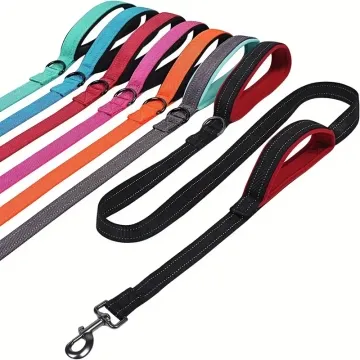
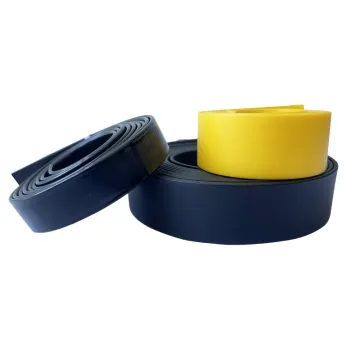
Materials for long dog training leads
Extra length adds weight and ground contact. Compare handling, tangling and wet grip across the full training lead, including its clip and storage method.
Content updated
In this guide
Key choices for your project
Length magnifies handling issues: metre weight, water pickup and tangling become more noticeable on a long lead. Compare a full-length prototype, not just a short swatch. Check how it coils for storage and how the end connection behaves when the line twists.
- Full-length wet weight
- Coiling and tangling
- Twist at the end connection
How quickly does ground contact change the lead surface?
Drag full-length samples across the representative ground types named by the buyer, then inspect fixed intervals along the line. Compare embedded grit, glazing, coating cuts and edge fuzz rather than reporting only the worst spot. Keep the clip and handle off the test path unless their ground contact is part of the use case.
- Surface condition at fixed positions along the lead
- Grit retention after the agreed cleaning step
A short swatch cannot represent a long training lead
Imagine two candidate materials that feel equally manageable as one-metre samples. At finished length, one lead may collect more water and grit, form tighter tangles, or become harder to distinguish at the clip and handler ends when dropped in a loose coil.
Build both candidates at the intended full length with the actual clip, handle or stop, and storage method. Compare total dry and wet mass, deployment, ground contact, end recognition, cleaning and recoiling under the buyer's representative conditions before selecting the construction.
Approve the full-length lead as a handled system, not the feel of a clean short sample.
Products to start with
Open a product to see its listed specification. Custom colours, dimensions and order terms are confirmed for your project.
More product photos
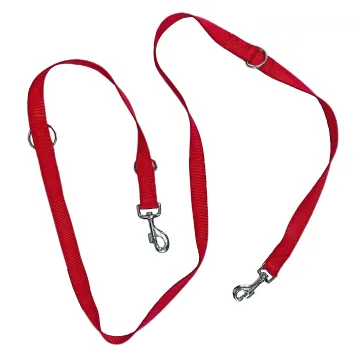
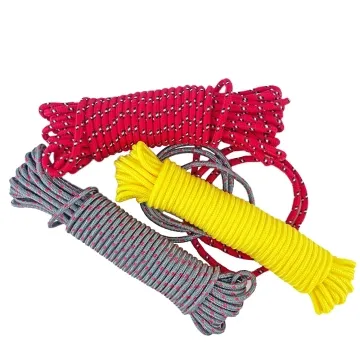
Can the handler identify both ends before the line is deployed?
Use distinct, agreed visual or tactile markers for the clip end and the handle or stop end. Check recognition in the packed coil, in low light and while wearing the intended gloves. A marker must remain readable after dirt and cleaning without being described as a safety or visibility rating.
- End recognition in the packed coil
- Marker condition after soil and cleaning
Define the whole line and its handling conditions
A useful long-lead record connects material choice to finished length, ground exposure, end construction and storage.
Swipe to see all columns ↔
| Field | What to record | How to confirm |
|---|---|---|
| Use surface | Grass, soil, sand or other buyer-defined representative ground | Run the complete lead over the agreed surfaces |
| Finished length | Usable length plus allowance consumed by folds and end connections | Measure the assembled lead from defined endpoints |
| Mass and water pickup | Dry mass plus wet mass after the agreed wetting, draining method and drain time | Weigh the complete assembly with the same clip at both defined points |
| End identification | Visual or tactile marker for clip end and handler end | Recognise each end in a packed coil under intended handling |
| Connections | Clip eye, swivel, folds, seams, handle or terminal stop | Inspect movement and orientation after the agreed sequence |
| Storage and cleaning | Coil, bag or winder plus soil-removal and drying method | Pack, deploy, clean and repack the same specimen |
End markings support handling identification only unless the buyer separately validates a safety or visibility function.
Download specification worksheet ↓Compare candidates at full working length
Set the use sequence
Define representative ground, wet exposure, handler gloves, deployment path and storage method. The output is one repeatable sequence for every candidate construction.
Build complete matched leads
Cut the intended finished length and add production-intent clip, handle or stop, seams and end markers. Record dry mass before any field handling.
Deploy, soil and recover
Run each lead through the same ground and wet sequence, inspecting fixed positions for grit, surface change, tangles, end recognition and hardware rotation.
Clean, dry and repack
Apply the agreed cleaning and drying conditions, then weigh, coil and deploy again. Retain observations by specimen rather than combining only the worst points.
Shortcuts that hide long-line behaviour
Approving from a short swatch
A small piece cannot reproduce total mass, water pickup or tangling. Build the specified length with its actual hardware before comparing handling.
Dragging every component accidentally
Ground contact from the clip or handle can distort the material comparison. Keep them off the route unless that contact belongs to the use case.
Turning an end marker into a visibility claim
Colour or texture may help identify ends without proving conspicuity or safety. Describe the function narrowly and validate any broader claim separately.
Questions before you choose
Is flat webbing or round rope better for a long training lead?
Flat webbing can lie predictably and show twists; round rope may handle and coil differently. The better choice depends on drag, ground contact, wet handling, weight and end connections. Compare equal finished lengths outdoors with the intended handler and hardware.
How heavy should a long dog training lead be?
There is no single target: total mass depends on length, material, diameter or width, coating and hardware. Weigh the finished lead, not a short sample. Check whether it drags comfortably, tangles, absorbs dirt or becomes difficult to handle when wet.
Tell us what you are making
You can enquire before every detail is settled. Tell us the intended use and what you need help choosing; add dimensions or quantities if you know them.
What happens after your enquiry
We review the intended use and open specification questions first. Sample options, costs, minimum quantities and timing can then be discussed against that brief. Sending an enquiry does not place an order.
Request a relevant sample →