Jacquard or printed webbing for your logo
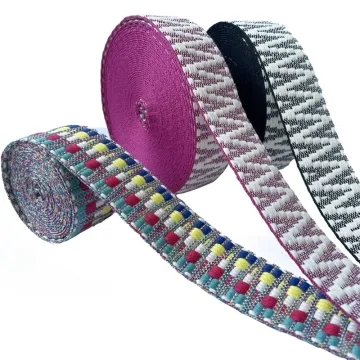
Use the same artwork to compare woven and printed samples. Fine gradients, reverse visibility and seam placement often decide the process before price does.
Content updated
In this guide
Key choices for your project
Compare the same artwork at its intended size in both processes. Jacquard builds the image from yarns; printing places colour on the surface. Gradients, very small text, reverse-side appearance and repeat length may lead to different choices within one brand collection.
- Artwork detail at actual size
- Front and reverse requirements
- Effect of folding on the logo
Choose the logo process from the artwork and use case
Jacquard builds the motif with yarns; printing places colour on a prepared tape. Compare the same artwork at the intended width, repeat and viewing distance before choosing.
Swipe to see the full comparison ↔
| Decision point | Jacquard route | Printed route |
|---|---|---|
| Artwork character | Strong for repeating logos, lettering and woven texture; very fine detail is limited by yarn and weave. | Better suited to gradients, pictorial detail and more colours when the chosen print system supports them. |
| Reverse side | The reverse is part of the weave and may not match the face unless designed as double-sided. | Usually face-led; ask what appears on the back and whether show-through matters. |
| Development input | Needs approved yarn colours, repeat length, edge layout and a woven strike-off. | Needs production-ready artwork, colour references, print method and a printed strike-off. |
| Cost comparison | Ask for loom/setup cost and the delivered price at the same quantity and number of colourways. | Ask for screen or setup cost, ink coverage and the same delivered quantity. |
| Approval focus | Check letter openness, repeat join, edge registration and both faces. | Check line sharpness, colour on the chosen base tape, rubbing and fold areas. |
Neither route is automatically cheaper or more durable. Compare the approved construction and decoration process for the actual order.
One logo needs two different production masters
Imagine the same brand mark shown on a jacquard simulation and a printed proof. In jacquard, the motif is formed by yarn interlacing during weaving, so fine gaps simplify and the reverse carries a related woven structure. In printing, colour is added after the base tape is woven, so the base shade and surface change the result.
Set finished logo size and placement, then prepare process-specific masters. For jacquard, review yarn roles, plan, edges, repeat and both faces; for print, define base tape, artwork, colours, route and handling. Build representative cut, folded and sewn components before comparing appearance and costs.
Choose between jacquard and print from process-specific components, not one shared digital proof or decoration label.
Create process-specific masters for one brand artwork
Do not force a woven and a printed version to match a single enlarged digital proof. Build one approved physical master for each process at finished width, then compare their shared brand cues: overall colour family, readable mark and placement. Record deliberate differences so they are not treated as defects on mixed collections.
- Separate physical master for each process
- Documented differences accepted across the collection
Price the cut component rather than the decorated metre
Add artwork preparation, colour setup, registration, cutting, reverse-side handling and any rejected placement to the comparison. The lower decorated-metre price may not produce the lower finished-part cost. Use one example cut plan for the intended SKU and label its assumptions, rather than extrapolating from a continuous roll quote.
- Finished component cost with cutting included
- Assumptions stated on the comparison cut plan
Compare how each route creates the mark
Preserve one brand intent while specifying different inputs and evidence for weaving and printing.
Swipe to see all columns ↔
| Decision field | Jacquard route | Printed route |
|---|---|---|
| Image formation | Motif formed through yarn interlacing during weaving | Colour applied to woven base tape |
| Artwork translation | Weave-plan grid, yarn roles, edge layout, repeat and simplified details | Print-ready file, scale, colour references, origin, repeat and method |
| Base and colour | Yarn colours and construction jointly form image and tape | Base tape shade, texture and finish affect applied colour |
| Reverse and hand | Review both woven faces, floats, edge firmness and finished hand | Review reverse show-through, ink or transfer response and hand change |
| Component layout | Check cut interval, folds, seams, joins and logo position | Check registration, cut areas, folds, seams and rubbing zones |
| Approval evidence | Coded physical woven sample linked to its weave-plan revision | Coded print on exact base tape linked to artwork and route |
Neither route is universally cheaper or more durable. Compare the proposed constructions, processes, quantities and product exposures for the actual order.
Download specification worksheet ↓Develop two masters from one brand brief
Lock shared brand intent
Define finished logo size, readable elements, colour family, placement and allowed process-specific differences before work.
Prepare process inputs
Create a weave plan for jacquard and a print-ready master for the selected woven base and print route.
Produce physical standards
Make coded jacquard and printed samples at finished width, recording construction, colours, direction and revision for each.
Build and compare components
Cut, fold, sew and expose representative parts, then compare appearance, handling, waste and quoted assumptions.
Comparisons that blur the two processes
Calling both routes surface decoration
Jacquard forms the motif during weaving; printing decorates woven base tape afterward. Their inputs and controls differ.
Forcing identical digital detail
Weave cells and print resolution constrain artwork differently. Protect brand cues while approving deliberate process-specific simplifications.
Comparing decorated roll prices only
Cut placement, reverse handling, setup, joins and rejected components affect delivered cost. Compare the same finished part scope.
Questions before you choose
Should my logo be woven in jacquard or printed on the webbing?
Choose jacquard when the woven texture and integrated yarn pattern suit the brand; choose print for finer lines, gradients or more image-like colour effects. Compare both at actual width, including reverse appearance, hand, repeat, minimum readable detail and intended cleaning.
Is a woven logo always more durable than a printed logo?
Not as a blanket rule. Woven and printed marks fail in different ways, and durability depends on yarns, print system, construction and use. Define the relevant rubbing, washing or exposure condition and compare finished samples with the same evaluation method.
Products to start with
Open a product to see its listed specification. Custom colours, dimensions and order terms are confirmed for your project.
More product photos
Tell us what you are making
You can enquire before every detail is settled. Tell us the intended use and what you need help choosing; add dimensions or quantities if you know them.
What happens after your enquiry
We review the intended use and open specification questions first. Sample options, costs, minimum quantities and timing can then be discussed against that brief. Sending an enquiry does not place an order.
Request a relevant sample →