Custom camouflage webbing patterns
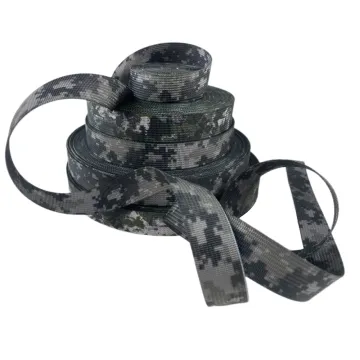
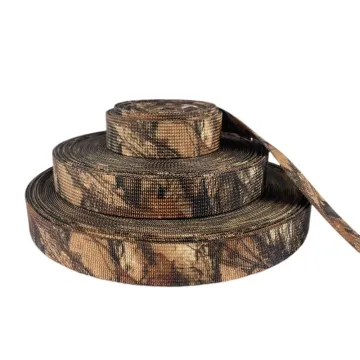
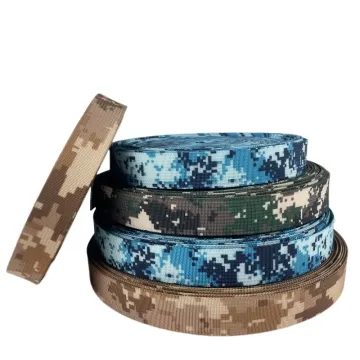
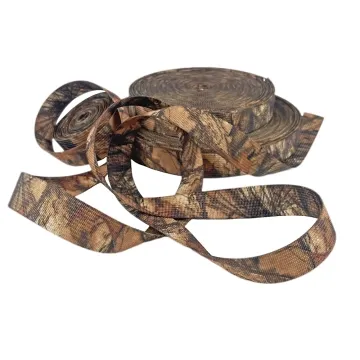
Pattern scale changes when camouflage moves from fabric to a narrow strap. Specify repeat, orientation and colour reference, then compare the strap beside the matching equipment.
Content updated
In this guide
Key choices for your project
Scale the camouflage artwork to the tape width before approval. A pattern intended for a large fabric panel may lose its character on a narrow strap. If equipment requires a specific visual or test requirement, identify it separately from the printed pattern file.
- Pattern scale at final width
- Repeat and colour reference
- Any separately specified testing
One attractive cut does not represent the full print run
Imagine approving a short camouflage strap cut from a balanced part of the repeat. Later cuts land in a pale field, paired tabs no longer look related and one narrow window isolates a shape the buyer does not want. The printing may be consistent even though finished components vary visibly.
Define whether variation is desired, acceptable or controlled for each component. Review windows across the full repeat, including light, dark and boundary areas, on the approved base tape. Assemble representative pairs and mark any prohibited zones before linking the artwork file to the physical print reference.
Approve the distribution of finished cut parts, not only one appealing sample taken from a broad repeat.
Decide whether cut parts should vary or match
A broad camouflage repeat can give every short strap a different crop. State whether that variation is desirable, merely acceptable or controlled for paired parts. Review several non-adjacent cut windows from the full artwork, including the lightest and darkest crops, before approving the overall pattern rather than one attractive segment.
- Lightest and darkest cut windows reviewed
- Matching rule stated for paired components
Prevent accidental focal shapes in narrow crops
Inspect the scaled artwork as a sequence of narrow windows, not only as one large field. A boundary or colour cluster may form an unintended symbol when isolated on the tape. Flag any prohibited crop and move or resize the artwork before sampling, then retain the accepted window set with the print file.
- Narrow-window review across the full repeat
- Prohibited crop zones marked on the artwork
Control variation across the repeat
State how cut components may differ and what must match.
Swipe to see all columns ↔
| Field | What to record | How to confirm |
|---|---|---|
| Component layout | Finished part lengths, visible areas, seams and folds | Overlay cut windows on the full repeat |
| Variation rule | Random variation, bounded range or matched left–right parts | Review a representative set of non-adjacent windows |
| Extremes | Lightest, darkest and boundary crops considered acceptable | Print and label the agreed window set |
| Colour reference | Approved base tape and physical printed reference | Compare under the buyer’s agreed viewing condition |
| Prohibited zones | Unwanted isolated shapes, joins or incomplete focal elements | Mark exclusions on the controlled artwork |
| File control | Artwork version, repeat, face, direction and usage permission | Link records to the retained print sample |
Visual approval does not establish camouflage function or certification; define performance evidence separately.
Download specification worksheet ↓Approve a population of cut parts
Map every component window
Place the finished cut lengths, seam allowances and folds across the full repeat. Identify which portions remain visible after assembly.
Sample the repeat deliberately
Select non-adjacent light, dark and boundary windows rather than one favourable segment. Print them on the intended base tape and label their origins.
Build the required pairs
Assemble left–right or multi-piece sets by the proposed matching rule. Compare visual relationship after folds, seams and hardware hide parts.
Freeze art and physical limits
Retain the controlled file, approved window set, base-tape reference and assembled examples. Record exclusions and any placement rule for cutting.
Sampling choices that hide component variation
Approving the best-looking segment
A broad repeat may contain much lighter or darker windows. Review deliberately selected extremes before accepting the appearance of production cut parts.
Expecting pairs to match by chance
Random cutting rarely guarantees related left and right pieces. State the matching rule and assess its placement, material and handling implications.
Treating the pattern name as compliance
A camouflage label or familiar palette proves no functional requirement. Separate visual artwork approval from buyer-defined performance or regulatory evidence.
Questions before you choose
How large should a camouflage repeat be on narrow webbing?
Scale it for the visible tape width and finished strap length, not for a fabric panel. Print several repeats at actual size and wrap them around hardware. Too large a repeat may show only one colour patch; too small can lose the intended character.
What should be checked before printing a custom camouflage pattern?
Confirm that the buyer has permission to use the artwork, then define colours, repeat, orientation and acceptable joins. Mark cut and seam zones on the product layout. Approve the pattern on the actual base colour because it affects every printed tone.
Products to start with
Open a product to see its listed specification. Custom colours, dimensions and order terms are confirmed for your project.
More product photos
Tell us what you are making
You can enquire before every detail is settled. Tell us the intended use and what you need help choosing; add dimensions or quantities if you know them.
What happens after your enquiry
We review the intended use and open specification questions first. Sample options, costs, minimum quantities and timing can then be discussed against that brief. Sending an enquiry does not place an order.
Request a relevant sample →