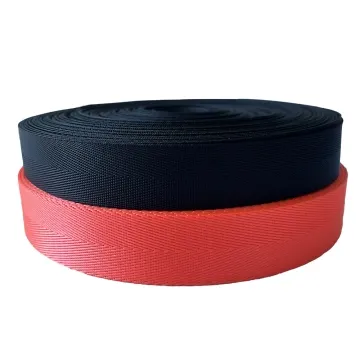
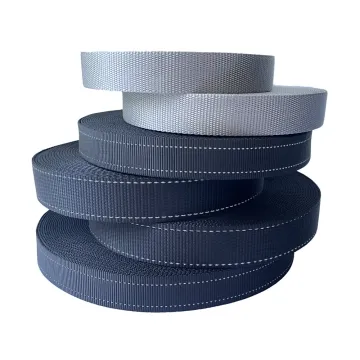
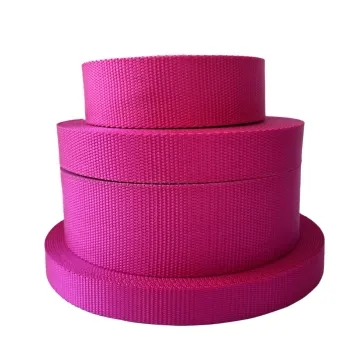
Grosgrain binding tape selection
For curved edges, the binding must fold without puckering the fabric. Test the ribbed tape on your tightest curve and check the visible width after sewing.
Content updated
In this guide
Key choices for your project
Grosgrain describes the crosswise rib; it does not automatically mean the tape will follow every curve. Test the fold around your actual seam stack and corner radius. Confirm whether a centre crease is required and measure the width remaining on each face after folding.
- Finished coverage on both sides
- Corner radius
- Centre-fold requirement
Nominal width can disappear around a thick curved edge
Imagine grosgrain giving equal coverage on a flat two-layer panel. At a padded corner, the compressed stack consumes width, the inner face barely reaches the stitch line and the closure overlap forms a hard lump. The tape was consistent; the edge geometry was missing.
Wrap candidate widths around fabric, foam, piping and reinforcement. Mark the fold, then sew straight sections, the smallest curve and complete closure. Measure coverage and capture after compression. Apply the stated care or handling; record overlap direction, trim shape and centre crease.
Approve grosgrain binding around the thickest stack, smallest curve and closure, using coverage and stitch capture rather than nominal width.
Derive binding width from the compressed seam stack
Wrap candidate widths around the actual fabric, foam, piping or reinforcement layers and close the seam as production will. Mark the fold before and after compression, then measure visible coverage on both faces. This physical wrap shows whether the nominal width leaves enough capture margin without an unnecessarily bulky overlap.
- Visible coverage on front and back after sewing
- Capture margin beyond the inner seam line
Resolve starts, stops and corner overlaps before bulk cutting
Make the first closure, final closure and sharpest corner in one continuous mock-up. Check whether the overlap creates a lump, exposes a treated end or pushes the stitch line outward. Record the approved overlap direction and trim shape so operators do not improvise the most visible parts of the binding.
- Thickness at the start-to-finish overlap
- Cut-end coverage at the sharpest corner
Define the bound edge through its full section
Relate the ribbed tape to edge layers, folding, seam capture, closures and care.
Swipe to see all columns ↔
| Field | What to record | How to confirm |
|---|---|---|
| Edge substrate | Outer and inner fabrics, foam, piping, reinforcement, thickness and compression | Build the production stack |
| Tape construction | Fibre, grosgrain structure, finished width, thickness, edge, hand and face | Retain a marked roll sample |
| Fold geometry | Centre crease or free fold, target front and back coverage and fold direction | Wrap and measure the section |
| Curves and corners | Smallest inner and outer radii, corner type, joins and stitch path | Sew a representative pattern |
| Start and finish | Overlap direction, length, trim shape, end treatment and visible face | Build one continuous closure |
| Approval after use | Care or handling sequence, puckering, twist, edge exposure and seam bulk | Compare marked samples before and after |
The buyer defines visible coverage, seam capture and appearance limits. Grosgrain describes a ribbed construction, not automatic curve conformity or load capacity.
Download specification worksheet ↓Build the binding around the real edge
Measure the compressed stack
Assemble every edge layer, compress it as sewing will, and record the section that the tape must wrap and cover.
Trial folds and curves
Mark face and direction, form any centre crease, then sew straight, inner-curve and outer-curve sections with recorded settings.
Close the complete edge
Construct the first end, sharpest corner and final overlap continuously, checking end coverage, bulk and movement of the stitch line.
Process and retain
Apply agreed care or handling, remeasure both faces and keep the approved marked closure with its trim and overlap instructions.
Shortcuts that misjudge grosgrain binding
Choosing from nominal width
Foam, piping, folds and compression consume width differently. Derive tape size from finished coverage on the thickest section.
Assuming every grosgrain bends alike
Rib structure, fibre, finish and edge affect curve behaviour. Sew the actual smallest radius before approving the tape.
Leaving the closure to the operator
An improvised overlap can expose a cut end or create a hard lump. Issue the approved direction, length and trim shape.
Questions before you choose
Can grosgrain ribbon be used as a load-bearing strap?
Grosgrain describes a ribbed ribbon structure, not a load rating. It is often considered for binding, trim or light loops, but suitability depends on the exact construction. For a structural strap, request defined strength data and evaluate the sewn assembly rather than assuming from appearance.
How wide should grosgrain binding tape be for a bag edge?
Work back from the finished visible width, panel stack and seam allowance. Fold the tape around the thickest edge and smallest curve, then check whether both sides are caught evenly by the stitch. Allow for any width lost through folding and turn-under.
Products to start with
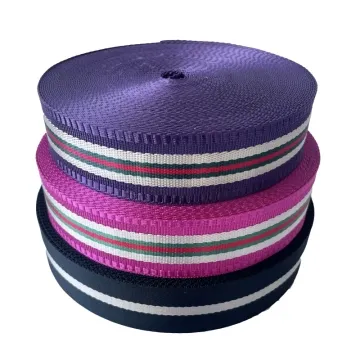
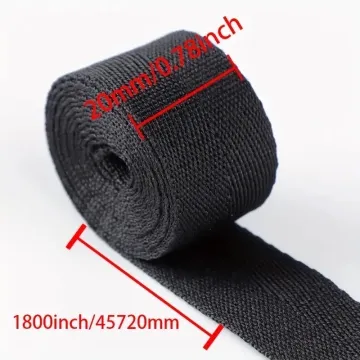
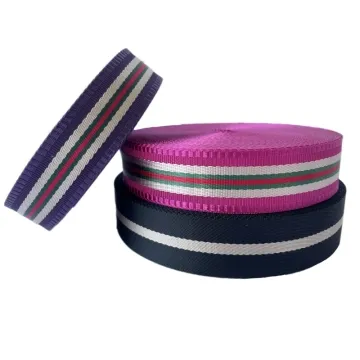
Open a product to see its listed specification. Custom colours, dimensions and order terms are confirmed for your project.
More product photos
Tell us what you are making
You can enquire before every detail is settled. Tell us the intended use and what you need help choosing; add dimensions or quantities if you know them.
What happens after your enquiry
We review the intended use and open specification questions first. Sample options, costs, minimum quantities and timing can then be discussed against that brief. Sending an enquiry does not place an order.
Request a relevant sample →