Webbing for Bottle Carrier Straps
A bottle carrier strap handles concentrated weight and may stay damp from condensation. Small adjusters, narrow anchors and skin contact make wet-state behaviour central to the specification.
Content updated
In this guide
Key choices for your project
Test the strap with the filled bottle, complete sleeve and production hardware. Carry it at the intended length, expose the assembly to realistic condensation and adjust it while damp. Approve the tape only after the anchor, buckle and shoulder contact work together.
- Weigh and carry the intended filled-bottle range rather than testing an empty sleeve.
- Wet the sleeve and strap contact area, then check colour transfer, hand and buckle movement.
- Cycle the complete anchor while watching sleeve distortion, stitch movement and edge damage.
Bottle weight and carrying style set the geometry
A short hand loop, fixed shoulder strap and adjustable crossbody strap place load differently. Define the filled weight range, carry position and desired adjustment before selecting width. A narrow tape saves space at the sleeve but can concentrate shoulder pressure. The usable length must include the path through hardware and the part buried at each anchor.
A dry fit can hide the carrier’s weak point
Imagine a narrow strap that runs smoothly through its adjuster on the table. With a cold filled bottle, condensation wets tape and sleeve; the adjuster becomes harder to move, the carrier tilts and one anchor puckers. A wider tape alone may overload the available seam space.
Compare the lightest and heaviest intended bottles at the planned hand, shoulder or crossbody positions. Build sleeve anchors and hardware with hidden allowances, then repeat adjustment and carrying while damp and after drying.
Approve the filled carrier under agreed damp exposure, recording usable length, anchor shape and hardware movement.
Products to start with
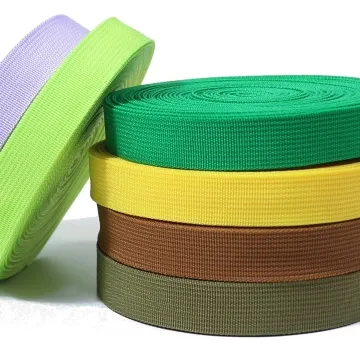
Open a product to see its listed specification. Custom colours, dimensions and order terms are confirmed for your project.
More product photos
Condensation changes the interface
Moisture can alter surface friction, make a compact adjuster slide or bind and transfer colour to clothing. It also wets the sleeve material around the anchor. Evaluate the assembled carrier damp and after drying, checking shape recovery and odour separately. Water-repellent tape does not make the sewn carrier waterproof and cannot replace a wet assembly trial.
Specify carrier geometry
Describe the carried assembly instead of an isolated tape roll.
Swipe to see all columns ↔
| Field | What to record | How to confirm |
|---|---|---|
| Bottle range | Filled weights, shapes and sleeve fit | Place each agreed bottle in the finished sleeve |
| Carry geometry | Hand, shoulder or crossbody use, drop and adjustment | Photograph short, middle and long settings under load |
| Usable and hidden length | Exposed span, folds, buckle path and anchor allowance | Measure a threaded, sewn sample, not visible spans alone |
| Tape contact | Finished width, edge feel, face and shoulder zone | Wear the loaded sample in the intended contact condition |
| Hardware path | Adjuster opening, threading, tail direction and retained length | Operate production-intent hardware dry and damp |
| Sleeve anchor | Seam, reinforcement, fold and layer count | Cycle the complete anchor and inspect distortion |
Buyer-defined comfort follows agreed damp exposure; one material’s water resistance does not describe the carrier.
Download specification worksheet ↓Turn strap length into a carrier trial
Set the filled-bottle envelope
List the bottle shapes and filled weights to cover, then mark the intended carry position and adjustment endpoints for each relevant size.
Account for consumed length
Thread the actual adjuster and build both sleeve anchors. Measure exposed drop, buckle take-up, folds and buried portions on the assembled carrier.
Wet the working interfaces as agreed
Apply the agreed moisture exposure to strap and sleeve, operate the adjuster, carry the load and inspect colour transfer, twist and anchor distortion.
Retain the approval set
Keep the filled-bottle list, marked carrier, threading photograph and dry-and-damp observations together so later samples can reproduce the approved geometry.
Shortcuts that produce the wrong carrier decision
Testing an empty sleeve
An empty carrier does not reveal shoulder pressure, tilt or anchor deformation. Use representative filled bottles and compare the intended carrying positions.
Adding only visible dimensions
Folds, anchors and adjuster threading consume tape and change the available travel. Derive cut length from a complete threaded prototype with allowances labelled.
Treating one wet property as the answer
Condensation can alter friction, hand, colour transfer and sleeve behaviour separately. Wet the assembled carrier as agreed and record each observation instead of assuming waterproof performance.
Questions before you choose
Should bottle strap width be chosen only from filled weight?
No. Weight matters, but shoulder contact, hardware opening, sleeve seam space and desired packability also control width. Compare complete carriers at the intended length and carrying position.
What should I send for a bottle carrier strap sample?
Provide the bottle or filled weight range, sleeve construction, anchor drawing, actual adjuster, carrying style, target length and expected moisture exposure. A wet-state assembled sample gives the most useful decision evidence.
Tell us what you are making
You can enquire before every detail is settled. Tell us the intended use and what you need help choosing; add dimensions or quantities if you know them.
What happens after your enquiry
We review the intended use and open specification questions first. Sample options, costs, minimum quantities and timing can then be discussed against that brief. Sending an enquiry does not place an order.
Request a relevant sample →