TPU vs PVC coated webbing
Compare coated samples at the same total thickness. Evaluate flexibility, surface grip, cut edges and hardware wear with the cleaner intended for the finished product.
Content updated
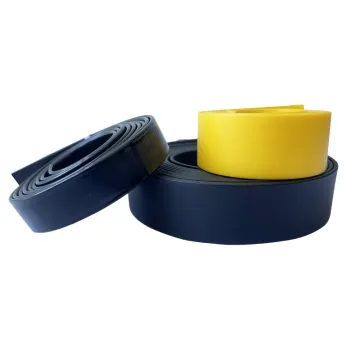
In this guide
Key choices for your project
The coating name alone does not define grip, flexibility or cleanability. Specify the core, coating thickness and intended temperature and cleaning exposure. Compare both candidates as finished straps, including cut ends and bends around the buckle, before selecting the construction.
- Core and coating thickness
- Flexibility in intended conditions
- Grip after the chosen cleaning routine
Specify the coating as a system, not an acronym
TPU and PVC are material families with many formulations. Compare coating thickness, core webbing, surface, use temperature and market requirements on the supplied construction.
Swipe to see the full comparison ↔
| Decision point | TPU-coated route | PVC-coated route |
|---|---|---|
| Flex and low-temperature feel | TPU can be formulated for strong flexibility at low temperature; test the offered grade after conditioning. | PVC flexibility depends strongly on formulation and plasticiser package; test the offered grade at the same condition. |
| Abrasion and cut surface | Often shortlisted for abrasion resistance, but coating thickness, core exposure and edge damage still need a defined test. | Can provide a robust coated surface; use the same abrasion and cut-edge inspection for a fair comparison. |
| Grip and appearance | Available from smooth to grippy and in clear or coloured grades; approve gloss, drag and colour on a production sample. | Can also vary in gloss, grip and colour; approve the exact surface rather than a generic resin name. |
| Compliance file | Request material declaration and documents relevant to the destination market and product category. | Request the same, including any restricted-substance information needed for the formulation. |
| Commercial choice | Compare delivered length, end processing, rejects and assembly speed. | Quote the same core, dimensions, finish, packing and delivered quantity. |
Material-family comparisons do not prove a finished product claim. Approve the exact formulation and complete coated tape.
A coating-family comparison can actually compare two different strap builds
Imagine a TPU-coated sample bending more easily than a PVC-coated sample. The first also has a thinner textile core and a smoother surface. After the intended cleaning sequence, the preferred sample changes grip at the buckle, while the other retains its original feel. The initial hand ranking did not isolate coating chemistry or predict the finished route.
Obtain the offered grade references and describe each complete cross-section. Where possible, match core, dimensions and surface; record differences that cannot be matched. Compare identified assemblies before, during and after the relevant exposure, with untreated controls. Make the decision from the offered constructions and required outcomes rather than a winner assigned to either acronym.
Choose between documented coated constructions through a controlled exposure-and-assembly matrix; keep unmatched variables visible when interpreting the result.
Approve bends, joints and cut edges
Build both coating candidates into the tightest bend and the exact joint planned for production. Inspect whitening, cracking, core exposure and spring-back after the assembly rests. Include the real cut or sealed edge, because a smooth mid-length surface says little about how the finished strap terminates.
- Coating condition at the tightest bend
- Core exposure at the finished end
Check contact with adjoining materials
Hold each coated sample against the actual light fabric, printed surface and hardware under the expected storage pressure. Then inspect blocking, surface marks and transferred colour before and after the chosen cleaner. Packaging contact can reveal a problem that a freely hanging strap sample never shows.
- Marks on adjacent light material
- Surface release after storage pressure
Build a comparable coated-webbing trial matrix
Each candidate needs a material record, a baseline and observations in the same intended use states.
Swipe to see all columns ↔
| Field | What to record | How to confirm |
|---|---|---|
| Offered construction | Supplier item, coating family and grade reference, core fibre/weave and revision | Reconcile sample with supplier record |
| Geometry and surface | Finished width, total section, core/coating dimensions where available, texture and face | Measure with one stated method |
| Assembly specimen | Hardware model, bend, layers, joint, cut end and adjacent material | Build matched complete paths |
| Exposure sequence | Relevant temperature, cleaner, concentration, contact, rinsing, drying and recovery | Agree sequence before comparison |
| Observed response | Bending, feeding, holding, tack, surface damage, edge opening and counterpart marks | Record baseline and defined checkpoints |
| Decision file | Mandatory outcomes, tolerated differences, production reference and required material documents | Sign the selected construction record |
No coating-family ranking transfers automatically to another grade, core, geometry or exposure. Acceptance applies to the identified supplied construction.
Download specification worksheet ↓Compare candidates without hiding construction changes
Identify and align the candidates
Obtain complete offered-construction references, measure them consistently and list core, thickness, texture or joint differences that prevent a chemistry-only comparison.
Establish assembly baselines
Build the intended hardware paths and contact pairs, retaining an untreated specimen of each candidate; record initial dimensions, movement and appearance.
Apply the relevant exposure sequence
Use the agreed conditions and checkpoints, including any required observation while cold, wet or freshly cleaned; do not replace these with recovered-room-state results.
Select and control the supplied build
Compare mandatory outputs, explain remaining trade-offs and retain the approved material, assembly, exposure record and documents under one construction revision.
Coating comparisons that answer the wrong question
Credit chemistry for a thinner core
Core, total thickness and texture can change bending and hardware contact. Match them where possible or describe the result as a complete-construction comparison.
Inspect only after everything has recovered
A strap may need to operate during the exposure. Record relevant in-use states as well as the agreed post-exposure recovery state.
Order by TPU or PVC alone
A family name omits grade, core, geometry and surface. Carry the selected construction reference and change-notification requirements into the order.
Questions before you choose
Is TPU-coated webbing always better than PVC-coated webbing?
No single coating is best for every product. Compare required flexibility, surface feel, temperature range, cleaning, colour and applicable material restrictions. Request the exact coating and base-webbing composition, then test the completed strap in its real hardware and environment.
Which coated webbing is better for a frequently cleaned pet lead?
Start with the cleaning agents, flexing, grip and temperature the lead will encounter. Examine cracking, tackiness, colour change and hardware movement after repeated cleaning. Also inspect stitched or welded joints, because the coating alone does not determine lead performance.
Products to start with
These products are starting references for the base construction. The requested finish and its test criteria need a separate feasibility review.
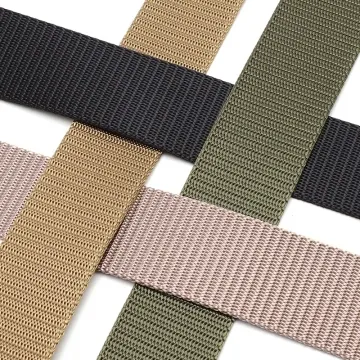
More product photos
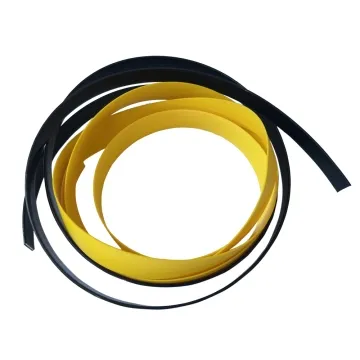
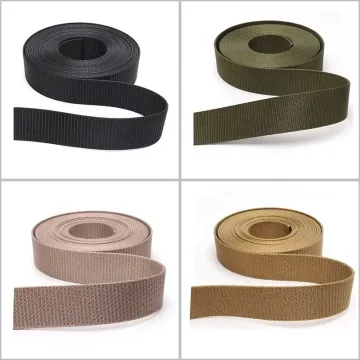
Tell us what you are making
You can enquire before every detail is settled. Tell us the intended use and what you need help choosing; add dimensions or quantities if you know them.
What happens after your enquiry
We review the intended use and open specification questions first. Sample options, costs, minimum quantities and timing can then be discussed against that brief. Sending an enquiry does not place an order.
Request a relevant sample →