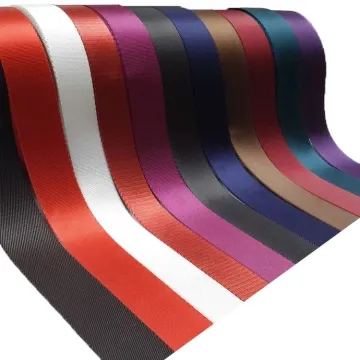
Polyester cotton webbing for bags
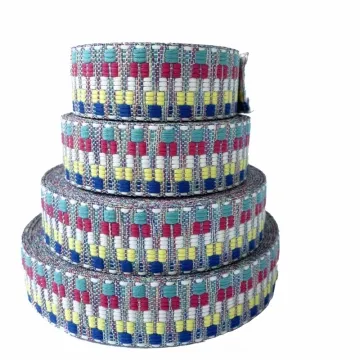
The stripe, face yarn and backing may use different fibres. For a coordinated bag range, confirm composition by construction and compare washed samples on the bag fabric.
Content updated
In this guide
Key choices for your project
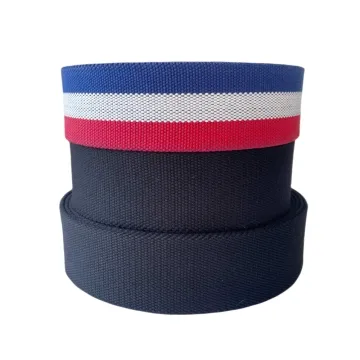
Confirm whether cotton and polyester are blended in the yarn or assigned to different parts of the weave. The ratio alone does not describe the surface. For a striped bag handle, approve both faces and the colour boundary after washing.
- Blend ratio and yarn placement
- Front and back appearance
- Stripe boundary after washing
The blend percentage does not predict which fibre appears on the bag
Imagine a striped handle specified only as polyester-cotton 65/35. One candidate places cotton-rich yarn on the visible face and polyester in the backing; another blends the fibres within similar-looking yarns. Beside the bag shell, their sheen, grip and colour separation differ even though the headline ratio matches.
Map each fibre to face, stripe, edge and backing before choosing. Sew both faces into the full shell, lining and reinforcement stack, then apply the intended care treatment. Compare hand, stripe boundaries, dimensional change and any transfer onto the adjacent fabric.
Approve fibre placement, finished appearance and care response together; a blend ratio alone cannot define the strap.
Choose the seam side from the complete stack
Place both faces against the bag shell, lining and reinforcement before deciding which side runs outward. A face that looks richer may feed differently or mark the adjacent fabric at the seam. Sew the full stack, then inspect puckering, edge escape and whether the stripe remains centred after the layers settle.
- Puckering where the tape meets the bag shell
- Stripe position after the full seam is pressed
Approve the two-fibre colour effect as a material
Cotton and polyester yarns can contribute differently to the final visual result, depending on how the construction is made and coloured. Treat any tonal contrast, mélange or sheen difference as part of the approved sample. Compare production candidates under agreed light and beside the bag fabric, rather than approving isolated yarn colours.
- Face appearance under the agreed light source
- Tonal relationship beside the selected bag fabric
Record the construction behind the cotton-polyester description
Tie composition to yarn position and product interfaces so later lots reproduce the approved visible and sewing behaviour.
Swipe to see all columns ↔
| Field | What to record | How to confirm |
|---|---|---|
| Composition map | Fibre percentages and where each yarn appears | Review construction statement against labelled sample faces |
| Visual layout | Stripe widths, colour sequence, face, back and edge appearance | Compare finished-width sample beside bag shell |
| Conditioned dimensions | Width, thickness and mass per length in agreed sample state | Measure several positions by one method |
| Care response | Intended wash or cleaning cycle and dimensions before and after | Treat webbing with representative bag-material stack |
| Assembly interface | Fold, seam stack, reinforcement, needle, thread and hardware path | Sew and thread a production-style section |
| Approval reference | Sample code, revision, colour reference and lot linkage | Seal signed cutting with specification record |
Fibre position and treatment route are construction-specific; acceptance limits and care conditions belong to the project.
Download specification worksheet ↓Qualify the blend as a finished bag component
Map fibres to the construction
Ask how cotton and polyester are distributed through face, backing, stripes and edges, then label both sides of each candidate sample.
Compare against the bag materials
Place conditioned candidates beside shell, lining and trim under agreed light, checking sheen, colour boundaries, grip and the intended outward face.
Reproduce sewing and care
Build the complete seam and hardware route, apply the intended care cycle, then measure change and inspect puckering, transfer and edge distortion.
Freeze the demonstrated version
Attach the chosen cutting to composition, construction, colour and assembly records, and state which yarn or process changes require renewed approval.
Blend assumptions that create visible bag defects
Buying from ratio alone
The same percentage can place fibres in different yarns or layers, changing face feel and sheen. Record where each fibre appears.
Approving loose tape only
A stripe may look centred until seam allowance and folding hide one side. Approve the tape inside the complete bag stack.
Testing webbing apart from the bag
Care treatment can change tape and shell differently or reveal transfer. Treat a representative joined assembly and compare it with the retained sample.
Questions before you choose
What is the advantage of polyester-cotton webbing for bag straps?
A blend can combine a cotton-influenced surface and hand with polyester in the construction, but the outcome depends on fibre ratio and yarn placement. Ask where each fibre appears, then compare grip, fold thickness, washing response and the face that will touch clothing.
How should striped polyester-cotton webbing be approved?
Approve the exact yarn ratio, stripe width and stripe position on both faces at finished tape width. Wash or condition it with the intended bag fabric, then inspect stripe edges, shrinkage and colour transfer. Keep the physical sample with the colour and construction record.
Products to start with
Open a product to see its listed specification. Custom colours, dimensions and order terms are confirmed for your project.
More product photos
Tell us what you are making
You can enquire before every detail is settled. Tell us the intended use and what you need help choosing; add dimensions or quantities if you know them.
What happens after your enquiry
We review the intended use and open specification questions first. Sample options, costs, minimum quantities and timing can then be discussed against that brief. Sending an enquiry does not place an order.
Request a relevant sample →