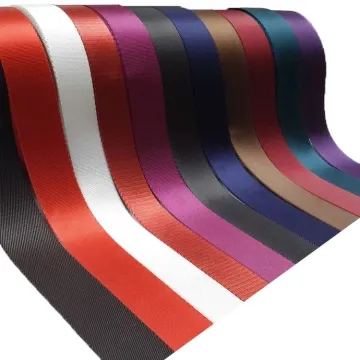
Webbing for luggage straps
A luggage strap wraps corners and slides over a case shell. Check usable length, buckle position and friction on both hard and soft luggage surfaces.
Content updated
In this guide
Key choices for your project
Separate a removable case strap from a load-bearing handle: they need different constructions and checks. For a wraparound strap, define the suitcase size range, buckle position and tail keeper. Check whether the printed identifier remains visible at the shortest adjustment.
- Suitcase size range
- Loose-tail management
- Logo position at minimum length
Place the buckle away from case features at both size limits
Wrap the strap around the smallest and largest case in the target range. At each extreme, mark where the buckle, adjuster and keeper sit relative to handles, zips, wheels and shell curves. Move the component layout before changing strap length if the buckle lands on a corner or obstructs normal case access.
- Buckle location on the smallest target case
- Clearance from handles, zips and wheels on the largest case
One strap layout may not work at both case-size limits
Imagine a wraparound strap adjusted neatly on the middle suitcase in a range. On the smallest case, its buckle may sit on a shell corner and the long tail can escape the keeper; on the largest, the buckle may cover a zip or the chosen logo repeat may disappear beneath the case.
Wrap the complete strap around representative smallest and largest cases. At both limits, mark buckle, adjuster, keeper, tail and artwork relative to handles, zips, wheels and curves. Then carry, place and rotate each case before fixing usable length and component positions.
Approve the layout at both case extremes, including the loose tail and visible artwork.
Products to start with
Open a product to see its listed specification. Custom colours, dimensions and order terms are confirmed for your project.
More product photos
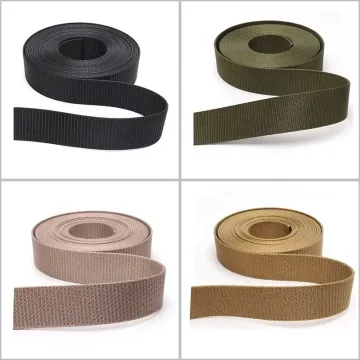
Control the loose tail throughout handling
Set the strap to each case size and route the remaining tail through its keeper as intended. Carry, place and rotate the case through the buyer’s handling simulation, then note any tail release, edge snag or buckle rotation. Evaluate this complete arrangement rather than judging the webbing roll or buckle separately.
- Tail retained after the agreed handling sequence
- Snag points at shell corners and case fittings
Define the strap around the case envelope
A wraparound-strap record connects case dimensions to usable adjustment, component layout and handling observations.
Swipe to see all columns ↔
| Field | What to record | How to confirm |
|---|---|---|
| Case envelope | Smallest and largest target cases, orientation and route | Wrap physical representatives or controlled fixtures |
| Strap path | Direction around shell, curves and clearance from case features | Mark the path on each extreme case |
| Hardware layout | Buckle, adjuster and keeper identities and positions | Photograph closed assemblies at shortest and longest settings |
| Adjustment and tail | Usable range, minimum engagement, free-tail length and keeper route | Measure after fitting each case extreme |
| Artwork placement | Repeat, reading direction and required visible identifier zone | Check visibility in both closed configurations |
| Handling observations | Buckle rotation, tail release, edge snag and case access | Carry, place and rotate the complete cases |
This specification covers a removable wraparound strap; a load-bearing suitcase handle needs its own construction and validation.
Download specification worksheet ↓Set the range from real case extremes
Map the two case envelopes
Record smallest and largest case dimensions, shell type, handles, zips, wheels and intended strap direction. Produce one marked route for each extreme.
Lay out hardware and artwork
Position buckle, adjuster, keeper and motif on both routes. Move components before changing overall length when a corner or case feature creates interference.
Set adjustment and tail control
Fit both cases, measure usable engagement and remaining tail, then pass the tail through its intended keeper without hiding the required identifier.
Run the handling sequence
Carry, place, rotate and access each case as defined, recording buckle movement, keeper release, snagging and artwork visibility before approving the layout.
Layout shortcuts that fail at an extreme
Designing around an average suitcase
A midpoint case can hide buckle and tail conflicts at both limits. Fit the smallest and largest representatives before setting component positions.
Checking only a loose strap
Tail length and keeper behaviour appear only after adjustment around a case. Evaluate the closed assembly through the planned handling sequence.
Placing logos before adjustment
A visible motif on the drawing may land under the case or hardware at one setting. Check reading direction and exposure at both extremes.
Questions before you choose
What webbing material is suitable for an adjustable luggage strap?
Start with buckle compatibility, repeated adjustment, handling and expected travel exposure. Polyester and polypropylene constructions can differ greatly in thickness and grip. Compare actual samples in the production buckle, then inspect slip, edge wear, colour transfer and sewn ends after loading.
How should a luggage strap be tested before bulk production?
Build the complete strap with buckle, stitching and end treatment. Fit it around the smallest and largest intended cases, load and handle the cases, then repeat adjustment. Inspect buckle release, strap slip, seam movement and damage where the tape bends around hardware.
Tell us what you are making
You can enquire before every detail is settled. Tell us the intended use and what you need help choosing; add dimensions or quantities if you know them.
What happens after your enquiry
We review the intended use and open specification questions first. Sample options, costs, minimum quantities and timing can then be discussed against that brief. Sending an enquiry does not place an order.
Request a relevant sample →