Custom rope colours and tracer yarns
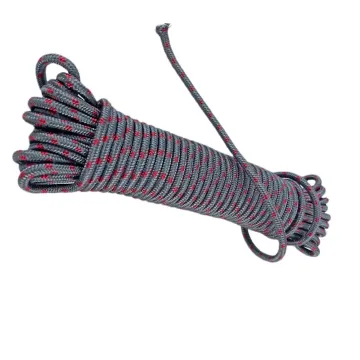
Tracer yarns need a defined colour sequence and spacing. Compare a full braid repeat beside the matching webbing or fabric before approving the colourway.
Content updated
In this guide
Key choices for your project
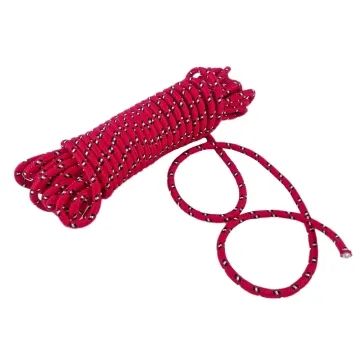
Describe the number, colour and direction of tracer yarns separately from the background. A short sample may not show the full spiral repeat. Review a longer length and a finished knot or loop, where the colour arrangement can look different.
- Background and tracer colours
- Full spiral repeat
- Appearance in the finished knot
Does the colour balance stay consistent around bends and knots?
View the approved braid straight, around the product's tightest bend and in the finished knot or loop. Dominant yarns can shift visually when the braid angle changes or one side compresses. Record acceptable colour balance in those three shapes, not only as a flat yarn sequence.
- Colour balance in straight, bent and knotted states
- Dominant yarn position on the visible product face
The same braid can change colour balance when bent
Imagine a straight rope matching the requested colour mixture. Around a tight bend, one yarn group becomes more visible; inside the knot, another colour nearly disappears. On paired handles, the tracer faces forward at one attachment but sits behind the other because rotational position was not marked. Correct yarn references still produce mismatched assemblies.
Review the proposed braid straight, around the intended bend and in the actual knot or loop. Arrange paired parts before finishing their ends; mark a common reference end and the tracer’s visible position at each attachment. Compare the set under agreed light and background, then retain it with the yarn arrangement, construction revision and sample codes.
Approve colour balance in finished shapes and define pair orientation, rather than relying on a flat colour sequence.
Products to start with
Open a product to see its listed specification. Custom colours, dimensions and order terms are confirmed for your project.
More product photos
Will paired coloured parts show the same spiral direction?
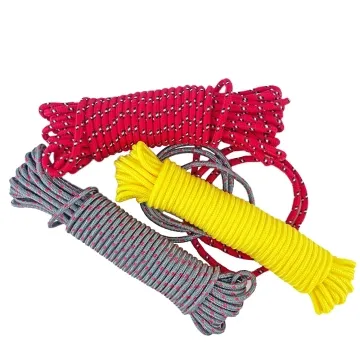
Define the apparent spiral direction and cut orientation for left-right handles or matched cords. Lay paired components in their final positions before end finishing and compare tracer entry points. Mixing opposite winding views may look like a colour error even when yarn colours and braid construction match.
- Spiral direction of each paired component
- Tracer entry point at corresponding finished ends
Specify colour within braid geometry
Record how yarn arrangement should appear when the rope bends, connects and pairs with another part.
Swipe to see all columns ↔
| Field | What to record | How to confirm |
|---|---|---|
| Colour references | Physical standards, fibre, lustre and viewing conditions | Compare yarns and rope under agreed light |
| Braid construction | Construction revision, cover yarn count, core and finished section | Retain an identified rope trial |
| Yarn arrangement | Colour sequence, braid angle and visible tracer position | Mark a straight relaxed sample |
| Finished shapes | Tightest bend, knot, loop or terminal and visible face | Build the intended product geometry |
| Paired orientation | Left-right position, cut direction, end reference and tracer entry | Lay paired parts in final positions |
| Reorder master | Rope sample identity, approval date, background and comparison notes | Store a labelled physical master |
Colour acceptance remains buyer-defined for the actual braid, product shape, surrounding materials and viewing light.
Download specification worksheet ↓Move colour approval into finished rope shapes
Map the visible geometry
Draw straight runs, tight bends, knots, loops, terminals and paired positions, marking which rope face is visible in each.
Braid and label a trial
Use the proposed fibre, yarn references, arrangement and construction; mark the reference end and tracer position, then label the construction revision and sample code.
Build bends and pairs
Form the intended bend or knot and arrange paired parts in final orientation before cutting or hiding their reference ends.
Compare and retain
Review straight, bent, connected and paired states under agreed light and background, then store the approved physical set for reorders.
Shortcuts that create colour surprises
Approving a flat colour chip
A chip cannot show fibre lustre, braid angle or mixed-yarn coverage. Compare colour on the actual rope construction under agreed light.
Reviewing only a straight length
Compression and curvature move yarns between visible and hidden positions. Include the tightest product bend and actual knot or loop.
Leaving pair direction undefined
Matching colours can look different when rotation moves the tracer behind one attachment. Mark its required visible position and reference end before finishing paired components.
Questions before you choose
Why does the same colour reference look different on braided rope?
Fibre, yarn lustre, braid angle and the mix of cover colours affect appearance. A flat colour chip cannot show those effects. Approve the colour on the actual rope construction under agreed lighting and view it both straight and curved.
How can custom rope colour be kept consistent on reorders?
Retain a labelled physical rope master with fibre, braid, yarn arrangement and approval conditions. Reference it on every order and ask about material or process changes. Compare the new sample with the master before production, especially when old and new stock will meet.
Tell us what you are making
You can enquire before every detail is settled. Tell us the intended use and what you need help choosing; add dimensions or quantities if you know them.
What happens after your enquiry
We review the intended use and open specification questions first. Sample options, costs, minimum quantities and timing can then be discussed against that brief. Sending an enquiry does not place an order.
Request a relevant sample →