How Outdoor Brands Specify Replacement Webbing for Repairs
An aged strap is evidence of how the product changed, not automatically the original colour or hand standard. Repair sourcing should begin with function and controlled product records.
Content updated
In this guide
Key choices for your project
Classify the replaced part as decorative, adjustment, load-bearing or safety-related before matching appearance. Use an unaged retained sample, BOM, drawing and test record whenever available; then confirm new webbing in the actual reused or replacement hardware and repair seam. Unknown critical parts must return to the original brand specification and validation process.
- Part function and criticality
- Unaged reference and controlled records
- Actual hardware, repair seam and validation route
Separate original specification from ageing
Sunlight, dirt, cleaners, abrasion and repeated flexing can alter colour, thickness, stiffness and surface texture. Record the used part as an ageing comparison, then seek an unexposed fold, archived production sample or documented colour and construction reference. If only the worn part exists, report uncertainty and approve the closest functional replacement as a new service part rather than claiming an exact reproduction.
- Exposed versus protected areas
- Archived sample or BOM reference
- Documented uncertainty where records are missing
A faded field-return strap is useful evidence, but not the original specification
Imagine an older backpack arriving with a torn side-compression strap, one reused buckle and no reliable bill of materials. The exposed tape is pale and stiff, while a section hidden inside the seam is darker and less worn. Matching the visible strip would reproduce ageing rather than necessarily recover the original construction.
First classify the part’s function and whether the brand’s controlled repair route applies. Record exposed and protected observations separately, recover dimensions before removing the seam, then trial coded replacement candidates through the retained buckle and repair-machine stack. Where original critical requirements remain unknown, stop substitution and escalate to the responsible product specification.
Specify a traceable service part from controlled records, protected evidence and the actual repair assembly, while documenting every unknown.
Products to start with
Open a product to see its listed specification. Custom colours, dimensions and order terms are confirmed for your project.
More product photos
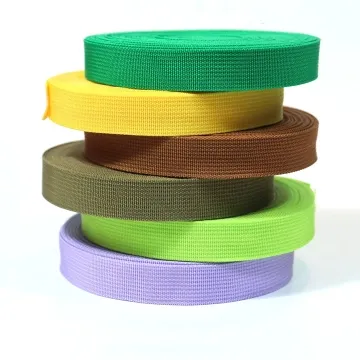
Validate buckle fit and control repair kits
A nominally equal width can feed differently when thickness, weave or finish changes. Thread the candidate through retained buckles, slots and adjusters, then test movement, holding, folding and sewability with the repair equipment and original panel stack. Label each cut part with product family, location, side, finished orientation, cut length and revision so similar-looking straps cannot be installed in the wrong repair.
- Movement and hold in retained hardware
- Repair-machine and seam compatibility
- Product, location, side and revision labels
Create a replacement-webbing repair record
The record connects the service part to one product revision and makes uncertainty, hardware fit and installation orientation visible.
Swipe to see all columns ↔
| Field | What to record | How to confirm |
|---|---|---|
| Product and location | Model, revision, size, left or right side and strap function | Photograph the intact product and mark the repair drawing |
| Part criticality | Decorative, adjustment, load-path or safety-related classification | Obtain disposition from the responsible brand function |
| Reference evidence | BOM, drawing, retained sample, protected area and aged exposed area | Rank sources and label any conflict or missing record |
| Replacement construction | Fiber, weave, width, thickness, finish, color and candidate code | Measure conditioned candidates and retain the selected sample |
| Repair interface | Reused or new hardware, layer stack, fold, seam and machine limits | Build a representative repair coupon and complete prototype |
| Kit identification | Cut length, orientation, product family, location and revision | Check labels against the repair instruction before packing |
A worn customer return can guide visual compatibility, but it should not be represented as an exact original standard when controlled evidence is missing.
Download specification worksheet ↓Turn field evidence into a controlled repair part
Quarantine and identify the return
Record product identity, damage location and strap routing before disassembly, preserving an intact side or protected section whenever the product provides one.
Recover requirements by authority
Check drawing, BOM and retained production sample first, then use protected and exposed return areas as clearly labeled secondary evidence.
Prove the repair interface
Thread candidates through the retained hardware and sew the real layer stack with repair equipment, observing movement, holding, fold bulk and seam quality.
Release a revisioned kit
Approve the service-part sample, cut length and orientation, issue installation instructions and labels, and preserve unresolved limitations in the repair record.
Repair decisions that create avoidable mismatch
Color-matching only the exposed face
Sun, soil and cleaning can alter the visible tape. Compare protected regions and controlled references before deciding whether compatibility or original appearance is required.
Measuring after the old seam is cut
Removal can distort fold allowance and erase orientation evidence. Photograph and measure routing, layers and reference points before taking the assembly apart.
Mixing similar repair-kit straps
Equal-looking cuts may serve different sides, lengths or product revisions. Mark family, location, orientation and revision on each part and its instruction.
Questions before you choose
Can colour be matched directly from a customer's used strap?
It can guide a service-colour decision, but it may no longer represent the original shade. Compare protected and exposed areas and use retained production evidence when possible. Record whether the goal is original appearance or visual compatibility with an aged product.
Can replacement webbing be promised for an unknown safety use?
No. If the function, original requirement or load path is unknown, do not make a substitution promise. Safety-related repairs require the original brand's controlled specification, approved repair procedure and complete-product revalidation by the responsible party.
Tell us what you are making
You can enquire before every detail is settled. Tell us the intended use and what you need help choosing; add dimensions or quantities if you know them.
What happens after your enquiry
We review the intended use and open specification questions first. Sample options, costs, minimum quantities and timing can then be discussed against that brief. Sending an enquiry does not place an order.
Request a relevant sample →