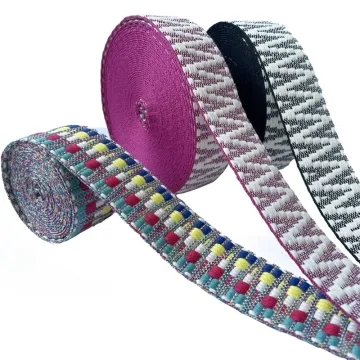
Nylon vs polyester webbing
A bag strap that feels right dry may behave differently when wet. Compare nylon and polyester in the same width, with your buckle and seam construction.
Content updated
In this guide
Key choices for your project
Nylon often offers more stretch and moisture uptake than polyester, while construction can change the result considerably. For a shoulder strap, compare recovery after loading as well as the first pull. Keep the width, stitch layout and test load alike so the comparison is useful.
- Stretch and recovery
- Dry versus damp adjustment
- Colour transfer to the bag
Where nylon and polyester change the finished strap
Compare the two fibres in the same width, weave and sewn assembly. The material name alone does not predict how the finished strap will adjust, dry or recover after loading.
Swipe to see the full comparison ↔
| Decision point | Nylon direction | Polyester direction |
|---|---|---|
| Wet and dry use | Usually takes up more moisture; recheck dimensions and buckle adjustment after wet conditioning. | Lower moisture uptake; often shortlisted when quicker drying and dimensional stability matter. |
| Stretch and recovery | Usually extends more under load; assess both cushioning and unwanted buckle slip. | Usually extends less; useful when the strap length must remain more stable. |
| Colour and surface | Approve the actual yarn, dye lot and finish; rubbing against pale materials still needs a transfer check. | Approve the actual yarn and finish; do not carry a print or colour approval over from nylon. |
| Final approval | Load and release the sewn sample, then measure recovery. | Run the same test with the same stitch pattern and hardware before deciding. |
These are selection tendencies, not guaranteed values. Construction, finish and test method can change the result.
The preferred dry shoulder strap may fail the damp adjustment check
Imagine a travel-bag team choosing nylon because its dry sample has the preferred hand. In the completed bag, however, the strap crosses a padded shoulder section, doubles through an adjuster and may be handled after rain. A polyester candidate feels firmer on the table but feeds more consistently in the damp assembly.
Map the strap into exposed span, pad interface, adjuster path and sewn return. Prepare candidates with comparable width and intended thickness, condition them dry and damp, and inspect each zone for feed, slip, recovery, color transfer and fold bulk. Record the trade-off instead of assigning one fiber a universal win.
Choose the exact webbing construction by its behavior in every relevant zone and moisture state of the finished strap.
Define which part of the strap must stay stable
Map the exposed span, doubled return and sewn anchor separately. A fibre change can be acceptable in the free-running section yet alter bulk or recovery where layers overlap. Mark the locations on the drawing and judge each candidate in the finished route, rather than approving one loose strip for every part.
- Finished thickness at the doubled return
- Length recovery at the exposed span
Lock the construction after choosing the fibre
Record the approved weave, thickness, weight, finish and sample code beside the fibre name. This prevents a later quote from substituting a visually similar tape whose buckle behaviour differs. Require a new component trial when any of those construction fields changes, even if the purchase description still says nylon or polyester.
- Approved sample code on the specification
- Reapproval trigger for weave or finish changes
Create a zone-based nylon–polyester comparison
This record keeps fiber, construction and use state connected while producing evidence that purchasing can attach to the approved sample.
Swipe to see all columns ↔
| Field | What to record | How to confirm |
|---|---|---|
| Candidate identity | Fiber, weave, thickness, mass, finish, color and sample code | Measure conditioned samples and retain labeled controls |
| Product zones | Free span, body contact, padded section, adjuster and sewn return | Mark the route on the drawing and finished prototype |
| Conditioning state | Dry baseline, buyer-defined wetting, wait and recovery sequence | Condition matched assemblies together |
| Hardware response | Feeding effort, holding, tail position and visible edge behavior | Cycle through the intended buckle and record each state |
| Assembly response | Fold bulk, stitch-zone distortion, drape and length recovery | Build equal seams and compare at marked locations |
| Appearance interaction | Shade under named lights and transfer to companion materials | Inspect beside the actual shell and retained reference |
General fiber tendencies help shortlist options; approval applies only to the recorded weave, finish, color, hardware and sewn construction.
Download specification worksheet ↓Turn a fiber choice into an approved strap construction
Map service states and zones
Identify rain or cleaning exposure, skin or shell contact, adjustment frequency and each folded or sewn location before requesting comparable candidate tapes.
Normalize the candidates
Align intended width and usable thickness, record weave and finish differences, and reject comparisons where an unrecorded construction change dominates the fiber choice.
Build dry and damp assemblies
Route each candidate through production hardware and equal seams, condition the complete straps together, then cycle adjustment without changing the tape path.
Issue a decision record
Summarize zone-level feed, holding, recovery, transfer and bulk, attach sample codes and state which changes trigger a new component approval.
Shortcuts that weaken a fiber decision
Buying a fiber reputation
Statements such as “nylon is stronger” or “polyester is outdoor” omit weave, finish and assembly. Compare named constructions under the actual product conditions.
Comparing unequal thickness unnoticed
Different bulk changes buckle grip, seam stack and apparent firmness. Measure conditioned tape and treat thickness as a controlled field, not a hidden difference.
Ignoring the companion fabric
A strap can pass its own appearance check yet mark a pale bag shell when damp. Include the real adjacent material and contact pressure.
Questions before you choose
Which webbing is the better choice for a bag that may get wet?
Polyester generally takes up less moisture and changes less between dry and damp use, while nylon often feels different and may stretch more. Compare equal-width constructions in the actual adjuster, then check recovery, colour transfer and hand after wetting and drying.
Is nylon webbing always stronger than polyester webbing?
No. Fibre type alone does not establish the strength of a finished strap. Yarn grade, weave, width, thickness, finishing and sewn joints all matter. Compare supplier test results made to the same method, then assess the complete sewn assembly for its intended load.
Products to start with
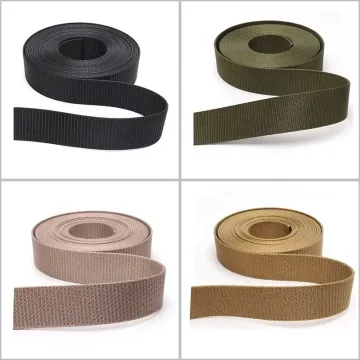
Open a product to see its listed specification. Custom colours, dimensions and order terms are confirmed for your project.
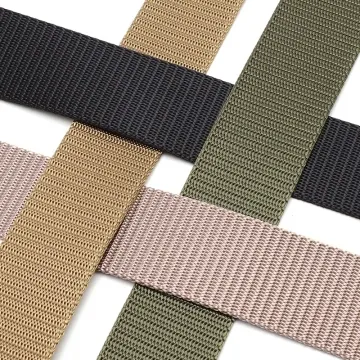
More product photos
Tell us what you are making
You can enquire before every detail is settled. Tell us the intended use and what you need help choosing; add dimensions or quantities if you know them.
What happens after your enquiry
We review the intended use and open specification questions first. Sample options, costs, minimum quantities and timing can then be discussed against that brief. Sending an enquiry does not place an order.
Request a relevant sample →