How to brief a webbing manufacturer
A useful manufacturer enquiry includes the end product and production constraints. Send a drawing or reference sample so material, weaving, printing and finishing can be discussed together.
Content updated
In this guide
Key choices for your project
Use the first supplier conversation to resolve the production brief: which processes are required, which sample can be shown and who approves changes. Send the same specification to each manufacturer. Compare the proposed construction and responsibilities as well as price before choosing a production partner.
- Processes needed for your design
- Sample and approval responsibility
- Quotation against one shared specification
A broad catalogue does not prove process control
Imagine two manufacturers presenting attractive samples. One resembles the target product, but its fibre, finish and subcontracted decoration differ from the proposal. Questions about artwork, tolerances and packing sit in separate threads, so quotations reflect different assumptions. Visual similarity has not created a comparable plan.
Issue a numbered brief describing the assembly and operation most likely to affect approval. Request evidence from a comparable weave, width, branding or finish route, and identify each step’s owner. Return questions by section, consolidate decisions and link the revised version to sample and quote.
Choose project fit from relevant process evidence, disclosed ownership and disciplined brief control rather than catalogue breadth.
Ask for evidence from a comparable process
Request a sample or process record that uses the relevant weave, width range, branding method or finishing route. A broad catalogue shows variety but does not prove control of your critical operation. Ask who owns that process and which steps are subcontracted before planning approval points.
- Comparable process sample or record
- In-house and subcontracted steps identified
Resolve assumptions in one controlled brief
Issue one numbered brief and ask the manufacturer to return questions and assumptions against its sections. Consolidate answers before sampling so artwork, material and packing choices do not live in separate message threads. Revise the brief when a decision changes and identify the version used for quotation.
- Numbered brief with returned assumptions
- Revision linked to sample and quote
Create a supplier comparison basis
The brief should connect product risk, construction, process responsibility, approval and quotation revision.
Swipe to see all columns ↔
| Field | What to record | How to confirm |
|---|---|---|
| Finished product | End use, assembly drawing, contact conditions and critical failure concern | Review the complete product path |
| Tape construction | Fibre, weave, width, thickness, finish, colour and measurable tolerances | Request an identified proposed construction |
| Critical interface | Hardware, seam, fold, cut or decoration that affects acceptance | Build the representative interface |
| Process ownership | In-house and subcontracted steps, responsible contact and handoff points | Return a process map with the response |
| Approval evidence | Comparable sample or record, trial scope, test method and retained reference | Tie evidence to the proposed route |
| Revision control | Brief number, assumptions, open points, sample identity and quote version | Use one dated decision log |
A comparable sample is evidence for a process discussion, not proof that a different finished application will pass.
Download specification worksheet ↓Compare manufacturers on the same brief
Define the critical operation
Identify the weave, finish, decoration or assembly interface most likely to change the finished product, and state how it will be approved.
Issue one numbered brief
Consolidate construction, artwork, interfaces, packing and commercial scope in one version, then request questions against its numbered sections.
Review evidence and ownership
Compare samples or records from relevant processes and identify who performs, controls and hands off every critical production step.
Resolve and relink decisions
Close assumptions in the brief, issue a revised version and link that same revision to the trial sample and quotation.
Shortcuts that weaken manufacturer selection
Using catalogue variety as process proof
A wide range shows examples, but not control of the project’s critical operation. Request evidence from the proposed or comparable production route.
Treating a similar sample as approval
Visual resemblance can hide different fibre, weave, finish or process. Rebuild the critical interface and approve the version tied to specification.
Leaving decisions in separate messages
Scattered artwork, material and packing choices create conflicting assumptions. Consolidate them in one revised brief before comparing samples and quotations.
Questions before you choose
How should I compare custom webbing manufacturers beyond price?
Give each supplier the same construction brief and compare how they control yarn, weave, colour, finishing, tolerances and lot traceability. Ask for a sample that represents the proposed route. Clear revision control and useful technical questions are stronger signals than a broad capability list.
Should I choose a manufacturer from a similar product sample?
A similar sample shows a starting point, not proof for your application. Check whether its fibre, width, weave, finish and production process match your specification. Then build the critical seam or hardware assembly and approve the version tied to a dated specification.
Products to start with
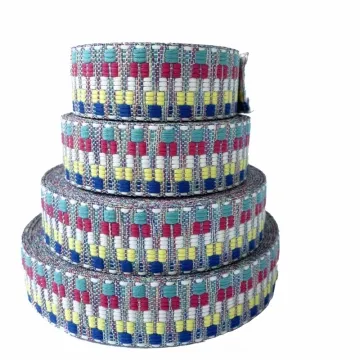
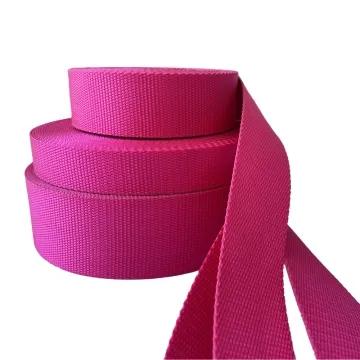
Open a product to see its listed specification. Custom colours, dimensions and order terms are confirmed for your project.
More product photos
Tell us what you are making
You can enquire before every detail is settled. Tell us the intended use and what you need help choosing; add dimensions or quantities if you know them.
What happens after your enquiry
We review the intended use and open specification questions first. Sample options, costs, minimum quantities and timing can then be discussed against that brief. Sending an enquiry does not place an order.
Request a relevant sample →