Should Webbing Strength and Elongation Be Tested When Wet?
A dry tensile result does not answer every wet-use question. Immersion, spray and high humidity create different moisture states, and hardware friction may change before the tape dries.
Content updated
In this guide
Key choices for your project
Add wet-state testing when the product can be loaded or adjusted before drying. Define the exposure route, water condition, duration, specimen temperature, drain or blot procedure and maximum delay before test. Record tensile behaviour and elongation in that state, then dry and retest recovery where the use case requires it. Include the actual buckle and seam assembly.
- Use-specific moisture conditioning
- Timed wet test plus optional dry-recovery test
- Actual buckle, seam and finished load path
A rain-wet strap is adjusted before it has time to dry
Imagine a leash that passes dry tensile checks but is loaded and shortened immediately after rain. One laboratory sprays and tests at once; another immerses, blots and waits. Their “wet” results describe different moisture states; neither checks buckle movement or the sewn end.
Define repeatable exposure, draining or blotting and maximum transfer time. Prepare matched independent groups from one lot for dry, wet and wet-then-dried comparison; a broken specimen cannot be reused. Record force, elongation, failure and grip slip, then test the seam and hardware path.
Wet-use evidence needs a defined moisture state, matched specimens and assembly checks, because a dry tape result cannot answer immediate wet loading and adjustment.
Translate use into a repeatable moisture state
A rain shower may wet the surface while prolonged immersion can affect the full construction; high humidity is a third condition. State whether specimens are tensioned during exposure and whether excess water is drained, blotted or retained. Identify sampling direction, gauge length and test speed under the selected method. Without those details, two ‘wet strength’ reports can describe materially different specimens and cannot be compared reliably.
- Spray, immersion or humidity condition
- Exposure and post-exposure handling
- Method, specimen identity and test timing
Read strength, elongation and recovery together
Report the requested set, not only the highest force: failure mode, elongation at the defined point, width and grip slippage change interpretation. Compare dry, wet and wet-then-dried strength with matched independent specimen groups from the same lot; a specimen pulled to failure cannot be dried and retested. Use separate unbroken retains for dimensional and hand recovery. For assemblies, also measure buckle movement, seam distortion and adjustability.
- Force, elongation and failure mode
- Dimension and hand after controlled drying
- Buckle slip, seam change and adjustability
Define a wet-state performance plan
Connect field exposure, specimen state and product-level decisions.
Swipe to see all columns ↔
| Field | Record | Confirm |
|---|---|---|
| Use exposure | Rain, spray, immersion or humidity route, water condition and duration | Link to product-use scenario |
| Specimen groups | Dry, wet and wet-then-dried sets, lot, roll, direction and quantity | Randomize matched independent pieces |
| Wet-state preparation | Temperature, tension during exposure, drain, blot or retained water | Follow timed written procedure |
| Test transfer | Removal time, maximum delay, handling and specimen temperature | Timestamp each specimen |
| Reported response | Force, elongation point, failure mode, width, grip slip and raw values | Review complete result set |
| Assembly and recovery | Seam, buckle path, movement, distortion, drying route and retained control | Test separate unbroken assemblies |
Methods, acceptance values and moisture states are project-defined. Never infer wet safe working load directly from bare-tape breaking results.
Download specification worksheet ↓Turn wet use into comparable evidence
Map when loading occurs
Identify whether the product is loaded, adjusted or folded during rain, immersion, high humidity or drying. Select the relevant moisture route.
Write the complete wet-state procedure
Define water condition, exposure time, specimen tension, temperature, draining or blotting and maximum delay so laboratories prepare the same state.
Prepare matched independent groups
Draw labeled specimens from the same lot for dry, wet and recovery sets. Allocate separate pieces for destructive tensile work and retained observations.
Test response and assembly behaviour
Record force, elongation and failures, then examine seam distortion, buckle movement and adjustability in separate assemblies and after the defined drying route.
Three wet-strength comparisons that cannot support a decision
Specify only “test when wet”
Spray, immersion and humidity create different states. Define exposure, excess-water handling, temperature and transfer time before comparing results.
Dry and retest the broken specimen
A specimen pulled to failure cannot measure recovery. Use matched independent groups and preserve unbroken pieces for dimensional and hand observations.
Test bare tape when the assembly carries risk
Moisture can change buckle friction and seam geometry before tape strength becomes limiting. Include the actual routed and sewn combination.
Questions before you choose
Can wet performance be predicted from fibre type alone?
No. Fibre, yarn, weave, finish, thickness, moisture route and test setup all influence the result. Use material knowledge to design the test, then evaluate the specific production construction and assembly under the buyer's defined condition.
Does a water-repellent finish remove the need for wet testing?
No. A finish may delay surface wetting without representing immersion, edge penetration, abrasion or aged performance. If the product can be used while wet, test the finished construction after the relevant exposure and include any buckle or seam that carries the load.
Products to start with
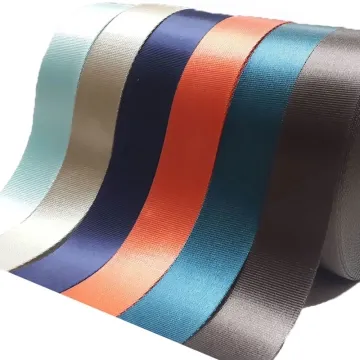
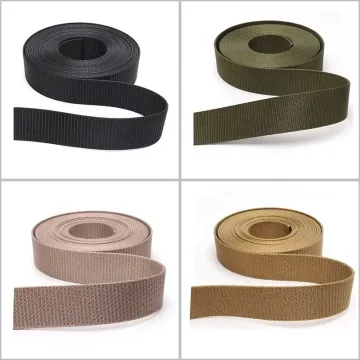
Open a product to see its listed specification. Custom colours, dimensions and order terms are confirmed for your project.
More product photos
Tell us what you are making
You can enquire before every detail is settled. Tell us the intended use and what you need help choosing; add dimensions or quantities if you know them.
What happens after your enquiry
We review the intended use and open specification questions first. Sample options, costs, minimum quantities and timing can then be discussed against that brief. Sending an enquiry does not place an order.
Request a relevant sample →